knee-deep in higher learning

Sunday, October 5, 2014

A Lot of Everything

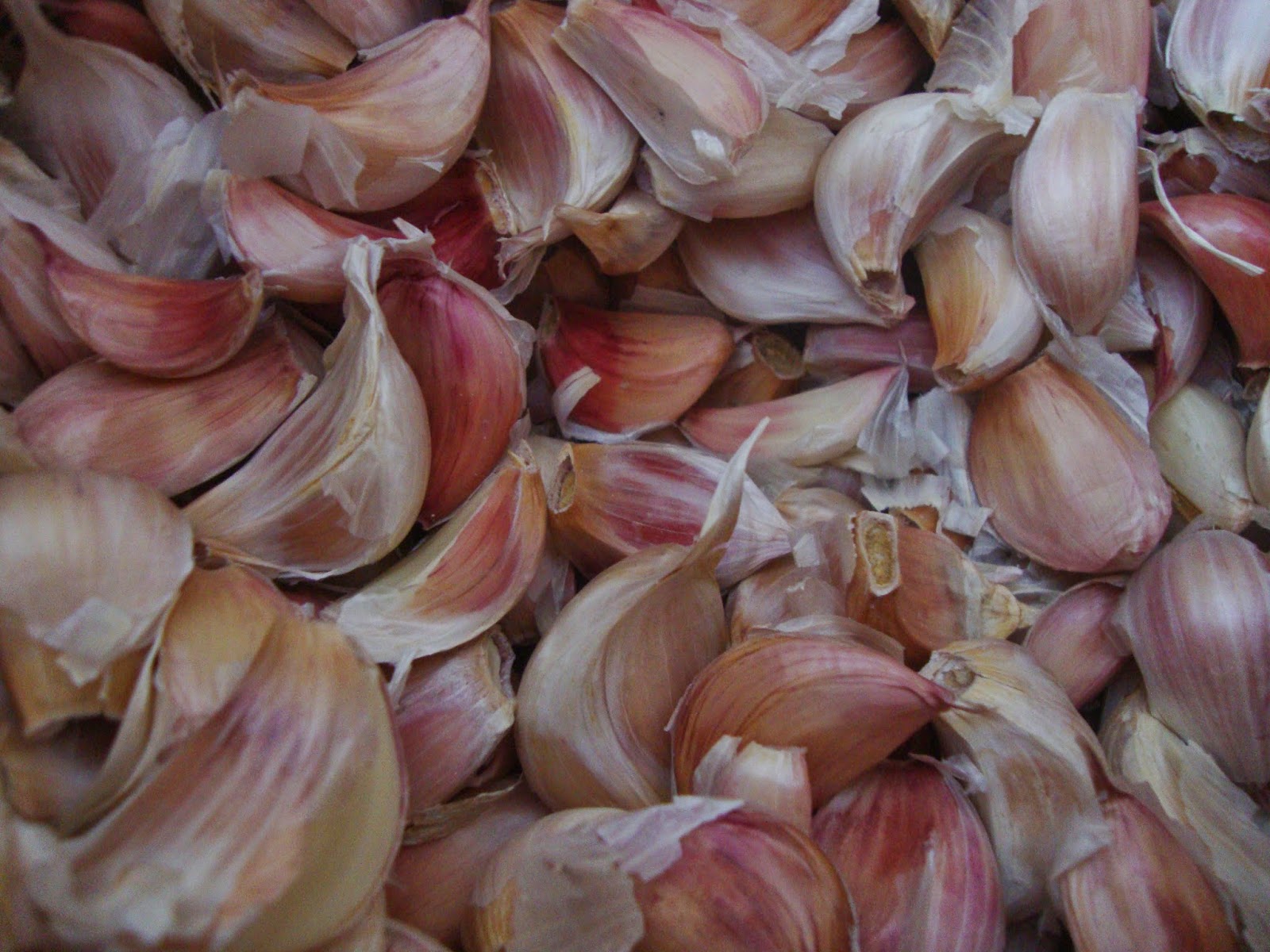
With each year, I feel my thoughts throb in time to the changing seasons, like a calendar with concepts instead of month names. For me August, September, and October have become Abundance, Acceptance, and Gratitude. This is when I can pull my weight in Asian pears from a tree whose limbs are touching the ground, groaning from all the plenitude of fruits. It is when the bright flowers of early summer are replaced by brown stems and pods full of promises for next year. It is when I clean and sort over 1,000 cloves of garlic for planting and feel like a queen, counting her rubies. It's like an annual crescendo, all the rewards of earlier work, a million wishes coming true at the same time.


Abundance:
After late summer's growing and gathering, early fall is always when I worry about where to put the latest pile of food I have harvested. I have to think in quantities of many gallons at a time. I know that come what may may come, so it just feels good to have A LOT.


But I'm not just talking about storing more shallots than one enormous family should eat in a winter. Our continuation as a species among species is not reliant on any one trait (strength, speed, size, having the most shallots, etc.) but in being ready for anything. Asteroids, Ice Ages, Ebola Zombies From Space: the one thing we all know is that we don't know what's next. Like squirrels preparing for winter, we know we should guard every useful morsel, but who knows what might be called for? What might be deemed useful? In a sense, because we cannot know what we will need next, appreciating diversity ends up being the only winning strategy: believing in the potential value of all things.


Acceptance:
Making my life a little bit fuller lately is a part-time job, working for the local school district. I'm a Special Education/Special Care Assistant at an elementary school, and honored to be part of the team that walks out to meet the short buses in the circle drive every morning.


Our task: to help each child living outside of life's various conventional parameters have the best educational experience possible.

Setting aside the belief that each one of us is a special snowflake for a moment, it is evident, when gathering many children from your town, that some of them are more special.  Maybe what sets one apart is visible from the outside, like her facial features, or his limp. Maybe it's not, like that child who cries inconsolably when overwhelmed, the one who cannot (and maybe should not) sit in a chair for more than ten seconds at a time, or the one for whom all the letters look backward or out of place.

It might be a little simplistic to group them all together when they are each a walking lesson in individuality,  but group them together we must. That's how we can help each one of them get more out of school. Due to the constraints of managing many young people in an enclosed space, the norms within a school can be a little narrow for some kids. With the help of a team of special educators, special students might find that the cookie cutter of classroom life can bend a little, to accommodate them, where they are; allowing the differences they bring to enhance the education of the other students in their class.

Remember that belief we set aside a couple of paragraphs ago? About us all being special? It's true. While categories can be useful, it seems sometimes that they just exist to be selectively ignored or applied.  Special. Average. Different. Normal.

We can live so many ways and make any number of choices during our lives. It's best to respect differences, even if it some of them make standing in line or taking a state assessment more difficult. That's just a matter of what the environment demands. Change the demands, you change everything. Kids who struggle in one system thrive in another, and vice versa. Special kids bring a new human dynamic, a unique contribution, if those in their environment are able to see their potential worth.

                                                      Relativism, FTW.


Gratitude:
When our George was labeled as having special needs, at the age of four, it really made me think. I understood that his diagnosis was made in order to give him access to help from people in the same profession I have just joined. I also knew why they wanted to assess him. Having been around enough four year old boys by then, I knew that, while each one of them was his own little dude, George was different from all of them in a way they were not different from each other. He could add together large numbers and had an amazing memory, but he rarely looked you in the eye and made chit chat.  He preferred to state empirical facts in a monotone, adorably husky, voice.


At preschool, he was very quiet, almost never speaking, causing them to suggest the assessment. He had a complete physical, combined with vision and hearing screenings, and in-depth sessions with speech pathologists and seasoned educators. They wondered if he was autistic, suspected something on the spectrum, but eventually settled on the special needs diagnosis.

Yeah, acceptance and all that, but when your kid gets such a label, you might find yourself looking for reasons why, things you could have done differently. My mind sought high and low through my memory for things that he missed out on, being the youngest of a threesome. Like most new mothers, I trotted my first-born, and second-born (to a lesser extent), to classes and community activities of all sort. George had gotten a lot less of that, as I was busier by the time he was ready for such pastimes.  Resolved to boost and enrich his social life, I looked up the next time and date of story time at our library. I thought it would provide a nice opportunity to spend time with other kids.  I might have been hoping that he'd copy them a little.

It was just the two of us walking into the bright children's section of the library, as the children's librarian began her program for the day.

 A fantastic place, run by a talented and dedicated  children's librarian, don't get me wrong.

With no other children to mind, I was free to ruminate on things I'd heard the specialists say about George as I watched him watch the children's librarian read to the townschildren.


The librarian noted that some of the kids in the group were moving around too much. "GOODNESS! Everyone has such a case of THE WIGGLES! We're going to need to use the WIGGLE BAG!!"she chirped. Soon, she was stooping and holding out an empty black cotton bag to each kid, singing, to the melody of "If You're Happy and You Know It, Clap Your Hands."--"Put your wiggles in the bag, put them in!" Each kid played along gleefully, wiggling their bodies, then tossing their invisible wiggles into the bag, and sitting still.

This is the sort of thing my other sons would have owned, convulsing convincingly and slam-dunking wiggles in an effort to outdo all the other wigglers. Instead, George stared at the little moment of spontaneous improv group theater until the bag got to him. He moved his legs perfunctorily and then flung his hands toward the opening of the bag, with a facial expression that said, "Let me get this straight. We are to wiggle, and then we are to pretend to put something in the bag which we do not put in the bag because it is nothing. Then we are still. And this was fun."

In that moment, I felt a swell of appreciation and kinship for my special son.  His logical mind and his sweetness. He was trying, bless him, to give us all what we wanted, whether it made any sense or not.  If I were a little more dramatic, I might have scooped him up and left at that very moment. Instead, I just made a mental note to let him lead the way more often.

When someone doesn't play along, it can make others nervous, and desirous to change that someone, compel them to conform. But what if we need to have our conventions reconsidered by some in our midst?

Would different people be valuable and important then?

 We have all become quite convinced of the importance of our social norms, 

but that doesn't mean that there isn't something a little asinine about them.

 Maybe it's safer to revel in the subjective, as long as you are reminded that it's just that: subjective. It is appealing to you,

and weird to someone else.

For his sake, for my sake, and for the sake of all people, I didn't want George to stop being different from everyone else. We need him and everyone else like him and everyone else unlike him.

This experience, and a few others, made me decide that George might do very well in an environment more suited to him than his local school classroom. We took the fish out of the tree, so to speak, and decided to unschool away. Let him do what he wanted with his time.


He has spent the last five years, drawing, tending to a revolving menagerie of pets, playing computer games, inventing games with his sister and friends, watching Spongebob, cracking jokes, playing the piano and violin, reading Captain Underpants, playing chess, dancing, writing lists, and riding his bike, among many other things.


He taught himself to read and write, is always researching the solar system, and does math just for fun, often making up problems for himself and solving them.

Those things that made his teachers notice and examine him also make him incapable of telling a lie. He wouldn't know how to begin to manipulate another person, nor can he live with doing anything less than his best effort in any chosen task. Is there still something very distinct about the way he sees the world and expresses himself? Something noticeably unlike everyone around him?

Thankfully, yes.

Sunday, July 20, 2014

Dispatches from Dreamland: Recuerdos, a Recipe, and a Request

Remember when I took that trip last month? Boy, I sure do, every day. Leaving my family behind was one of the hardest things I've ever done, but now that I'm home again, I find my thoughts keep flying over the continents and seas to the people who shared their homes with me, and the kids I came to love dearly.


How do we remember things? I could sigh nostalgically over a photo, or my computer screen. There's also the recounting to my husband the billionth tiny detail about daily life there, but the other senses remember things too.

It should come as no surprise that one of my favorite ways to get to Memory Lane is by eating. There were some great food-related memories from that trip (that didn't involve making pizza.) For example, during my next-to-last weekend in South America, a friend I met at the Fundación Niños de los Andes, who also happened to be a chef, took me to her family farm, where I experienced the most delicious celebration of summer: Chiles en Nogada.

 shown here without the Nogada sauce

It's a Mexican dish, but we were eating it in Colombia. And last week, we ate it here in Tillamook. After a night of soaking, a full day of chopping, and a backyard fire, I remembered that afternoon on that mountainside with my mouth.

Chiles en Nogada 
from Marcela Jaramillo Garcia
 chef, teacher, and co-owner of Pishqa and Öll Cocina Artesenal

15 ml. vegetable oil (to fry garlic, onions, tomato, almonds, olives and raisins)
4 cloves of garlic
1/4 c. red onion (finely chopped)
1 pinch sea salt
1/4 c. water
250 g. ripe tomatoes (chopped/liquified)
1/4 c. blanched almonds, halved
50 g. black raisins, chopped (dried cherries would be great here, for the raisin-haters)
8 green olives, cut into fourths
1 t. chopped fresh parsley
1 clove
1/4 cinnamon stick
 8 g. black pepper

15 g. vegetable oil (for frying the fruit)
1 c. diced apple
1 c. diced pear
1 c. diced peaches
1 T. brown sugar
1 c. diced bananas
8 poblano peppers

Nogada Sauce
1/4 c. almonds, peeled and soaked in water overnight
100 g. queso fresco
200 g. walnuts
180 ml. cold water

In large saucepan, heat the oil for frying the garlic, onions, tomato, almonds, olives and raisinsa. Start off by frying two crushed cloves of garlic until they're golden and translucent. Discard.
Add the onion and tomato and cook for a few minutes. Add the almonds, raisins, olives, and parsley. Cook for 2 minutes.
Grind the cloves, cinnamon, and pepper. Add them to the saucepan. Cook them for a minute more and remove the pan from the heat.

In another pan heat the oil for frying the fruit. Start off with two more cloves of crushed garlic, cooked and removed, then add the diced apple, pear and peach. Cover and cook for a few minutes. Add the brown sugar and banana before stirring the fruit mixture into the onion-tomato mixture. Now you have your pepper filling. It looked like this when I was ready to spoon it into the peppers.


To prepare the peppers:
Place whole peppers over direct heat (we used a fire in the backyard fire pit), until the skin is blistered and burned. Like, all-the-way, black-all-over burned. Place them into a sealable plastic bag, to make the peel sweat and easy to remove.


Wait at least fifteen minutes before taking them out and removing all of the blackened skin. After all the black is gone, make a long slit in the pepper, from stem to end, remove the seeds and pat insides dry with a paper towel. Put on a plate and spoon in the filling until full. Then, slather them with this sauce:

Nogada Sauce:
Mix almonds, cheese, and walnuts together in a food processor, using enough water to get a sauce consistency.


Fair Warning: While the dad of the house and I loved everything about Chiles en Nogada, the kids were freaked out by the mix of sweet and savory. You know what that means, I need to make it more often!

When I ate this bright burst of flavors in Colombia, I was on the side of  a steep green mountain, surrounded by fruit trees and tweeting birds. The lightness and balance of flavors is simple and sophisticated at the same time. And, when made with green peppers, it bears the colors of the Mexican flag: red, white, and green.


While I'm no chef, my own stab at stuffed peppers was close enough to make me remember and feel grateful for having had the opportunity to eat Mexican food with new friends in Colombia.

These new friends came into my life because of the heroic organization, Fundación Niños de los Andes, where I spent much of my June.

Last month while working on our Happy fan homage video, I took my camera to the Fundación and soon found myself with a long line of kids who wanted to be photographed: alone, together, in trees, with their boyfriends, and friends. Typical teen activity, no? But more so, because these kids don't have anyone else on the job. It's one thing to call some beloved daughter, taking her billionth bathroom selfie, self-absorbed. It's another thing to see a pretty young girl with her whole life ahead of her, wanting a memento of this fleeting moment, when she and the guy she loves are just figuring out what that even means. Maybe she knows she's beautiful, and maybe that's beautiful.


There's no scrapbook of firsts for this girl. No curl from a first haircut or chubby ink footprints on parchment. No proud mother horning in with a camera to make sure these moments will not be forgotten. It's up to her to capture the magic, and she's not taking the job lightly.

After taking photos of every student with every other student, one younger girl approached me, asking to borrow my camera. This sort of thing is not done, normally. One does not go to South America, visit a place where the kids have very little, and hand one of them your camera. But, I've never been much good at being normal. I handed her my sturdiest camera in an act of faith. She ran around the grounds, taking photos of buildings, animals, her friends, and herself. When I was about to leave, she returned it, anxious to know if she would ever see paper copies of the photos she just took. I promised her I would print them up when I was stateside, and mail them to her. Then, I looked at her photos.


This girl can shoot! 


 That's when I got an idea.


It was at around this point in my trip when I was already planning next year's visit to Manizales, Colombia, to do more work at Fundación Niños de los Andes. As I scrolled through my camera files, looking at the world through her little girl's eyes, I felt the sudden urge to return with a camera or two, teach these kids the basics of photography, and see what kind of art they make. Imagine a small group of camera-wielding kids walking around the grounds of the Fundación, learning and discovering this unique form of self-expression.

Brace yourself. Maybe take a deep breath. I'm about to do some online begging.

It's just that, this where you come in, O, benevolent reader.

I'd like you to send me your unused digital camera(s) if you have any.  If, in your upgrading ways, you happen to have a camera that works well, but probably won't get much more action; and if you have an urge in your heart to do something nice for someone you don't know, I'd love to take said camera to Colombia and give more niños the opportunity to take more fotos. If I get enough, (including chargers/cords/cards and other necessary equipment), I can get permission to teach a workshop with more than one student, develop a structured lesson plan, and complete projects which can be shared here and elsewhere online. So you'll see the memories you helped make.

To contribute your hand-me-down picture taking machine, or ask me for more details about this project before mailing your precious electronic devices to some stranger off the internet, send an email to www.thomaslaszlo11@gmail.com.

Gracias

Wednesday, July 2, 2014

Dispatches from Dreamland: Back to Reality

This dispatch is from the dreamland that is the coast of the Pacific Northwest. Home from an adventure abroad, I am getting right to work on the many things of summer that require my attention. Just one teeny thing from the trip. A recuerdo for y'all, if you want it.

The kids of Fundación Niños de los Andes wanted to sing something in English, which set me on a mental quest to find something that covered the trifecta of criteria: Popular. Useful, Appropriate. The one song that came to mind which would a) entice all to participate, b) teach phrases and constructions that one might actually use, in English and c) not teach children to say things they are too young to understand was Pharrell Williams', "Happy." Together, we got the lyrics printed and sang the chorus over and over, as I pointed in time to words on a white board. Using the one internet-connected computer at their disposal, the kids watched the official music video, and all of the over eight hundred fan homages. They saw people dance, smile, and clap all over the world, and they wanted to do it too. So, after a quick talk with the directors of the Fundación, we made this, Fundación Niños de los Andes' answer to the ubiquitous anthem for being resilient and cheerful.


I feel deeply grateful to have spent some time with the good people of this organization, and am determined to go back soon and do even more with them. The kids I met and taught schooled me in return; especially on the art of letting nothin' bring you down.

Friday, June 13, 2014

Dispatches from Dreamland: Part III: I'm Hooked and I Can't Stop Caring

¿Cuál es tu sueño?
Por favor, oprima el número uno para inglés..
What is your dream?


Answering that question is how each child who comes to the Fundación Niños de los Andes begins their experience with this organization. For the last week and a half, I have had the distinct honor of volunteering one of the Fundación's sites, here in Manizales, Colombia.


I came for the classroom Spanish practice, I stayed because well, I said I would. But I like staying because every smile, every hug, every kind word, and curious question adds a new crack to my heart.

Time for a sad story: If you've known me for any length of time, you probably know that this isn't my first visit to South America. I traveled to Ecuador when I was in college, many years ago. Even though I stayed in a pretty tame little tourist trap of a town, the reality of life in this part of the world was ever present: children, with no place to live, and nobody caring for them. I saw them scrambling on garbage heaps to eat fruit peels, fighting with stray dogs for old bread, hobbling across the street because they had podiatric issues that were untended, begging for money, but still happy when they got a warm sweater instead. I guess I should have been deeply saddened by all of this, but the factors behind their unprotected childhoods were so immense, and so unsolvable; being a pouty gringa seemed profoundly useless.

And now, if you can take it, another sad story. Meet Jaime Jaramillo.


Known in these parts as "Papá Jaime," he was motivated to help children living in the streets, sewers, and dumps of Bogotá, Colombia, when he saw such a child, a young girl, crushed by a truck. She had rushed into the street to pick up what she thought was a box containing a doll. The box was empty. Jaime couldn't continue with life as he had lived it before after witnessing that. He founded Fundación Niños de los Andes in 1988, and  little by little, he built an organization that, for the children it has helped, has made all the difference in the world.


How does one approach this problem, much less solve it? I have had a little time to get to know the Fundación Niños de los Andes, and their approach focuses on the child. After receiving a child who has been removed from the dangerous environment in which he or she lives, they set about the gargatuan task of improving their lives, a little bit at a time. Once medical needs have been met, the child is asked "What is your dream?" Gone is the superstition that uttering your inner hopes will prevent them from coming true. The good people working for the Fundación know that you can't make something happen if you never allow yourself to say it out loud. Once the children can articulate a real goal for their lives, they are asked to paint a picture of their dreams, so they can start to realize them.

Through community partenerships, these kids get to do the things they drew: become athletes, fly in an airplane, learn English, achieve career goals, gain an education.


When I arrived for my first day at the Fundación Niños de los Andes, I was greeted by friendly directors who explained to me their mission, introduced me to the staff, and gave me a tour of the grounds. I admired how clean and efficient the facilities are, providing for every need imaginable. Their goal is to address the mental, physical, and spiritual needs of everyone they help.  Some kids might have been sleeping in sewers, boxes, steps, or not at all, due to drug addiction. Here, they each have a fully made bed, complete with a stuffed animal. Instead of hunger, they are fed well-balanced meals. Abuse and neglect are replaced with loving staff, who are teachers and mentors who hug them and wipe away their tears when the details of their personal lives hurt too much.

My tour wasn't limited to the buildings. I also discovered a very special project known as the Sendero Mágico. "The Magical Path," is an immense symbolic outdoor project that I would call a garden, if that were sufficient enough.  For now, it is outlined, with some of the vision realized.

 
A little more than a painting of a dream, drawn in the dirt, the idea is for this strip of nature is for the public at large to have an opportunity to access the kind of self-improvement offered to the children there. The basic premise of the Fundación Niños de los Andes is to attend the body, mind, and spirit of its children, and this is manifested in the outline and plan of the Sendero Mágico. Due to a tragic accident, Papa Jaime is now quadriplegic. For this reason, the entry to the garden will be filled with plants that he, and people like him, can sense: full of color, aroma, and taste. On to the zen garden, where there will be an area suitable for yoga classes, and next to it, the place where the mind is tended by the forces of nature. Earth and air, which are present anywhere you go outside.

 Fire
 in the form of a fire pit. Water

 
 in the form of a reflecting pool.

These areas are dedicated to bringing harmony to the mind. At the path's end, there is a large paved spot. This is where visitors will be asked to paint a picture of their dream; invited to take all that they have gained from the magic garden and push it into some kind of real change in their lives.

It's also a great place for hand-stands.

After touring the Sendero Mágico, I was moved. Everyone I've met here in Colombia is a very devout Catholic, yet this garden is full of Eastern philosophy. I admire how they embrace other ways of reaching the same goal. Is it inner peace? Self discipline? Impetus to change themselves? I can't quite put my finger on it, but I can't deny it's good.


After ambling peacefully through the magical path, I was thrown into the girls' house, to hang out with them a bit, and have lunch, after which, I would be "rescued." Um...okay. What was I in for?

I don't know if anything could have prepared me for what was next. In five short minutes, I found myself of a bench, surrounded by about twenty girls, one of whom gave me a glare that rivals pre-film career Ice Cube. I was devastated and enamored all at the same time, especially when she sat next to me without saying a word and put her head on my shoulder. They all wanted to sit next to me, and the ones sitting next to me, wrapped their arms around my waist, put their hands on my knees, and occasionally touched my hair. It was a little intense, but I wasn't put off by any of it. These were girls living without mothers, and even though some of them were quite grown young ladies, it was obvious that inside them was a child, reaching out for something: diversion, affection, attention, a chance to prove how cool and funny they are. And they are.

They asked me questions. I tried to understand and answer them. They asked me to sing something in English. How to explain the them that the songs I can most easily sing are in Spanish? Lame. As I looked at all of the expectant faces, I shouted at myself in my head, "THINK OF SOMETHING!" For some reason, all my brain coughed up in response was Baby Got Back. They absolutely loved it, and asked me to sing it again and again. Eventually, I asked them to clap for me, to lay down the beat. As I rapped one of the tackiest songs in existence, within minutes of meeting all of them, I tried not to dwell too much on how surreal it all was. I didn't want to forget a lyric or mess up my ritmo.

They moaned with delightful yearning when I said I was married. The ultimate in grown-upness! And have four children? And a zooful of pets?! Big eyes all around and more questions. They asked me how to say their names in English, told me on what days to expect the best meals, and then cranked up the music and started dancing the rhumba in pairs. One of them grabbed me and started commanding me on how to move my feet. Being a total Latin music geek, I've basically been practicing for this very moment most of my adult life. I picked it up quickly, and they exclaimed how fast I learned. Then, the reggaeton, which for those who don't know, is straight up booty-shaking music. Being pretty sweaty and completely without boundaries at this point, I responded to their demands to dance with a quick how-low-can-you-go grind-off with one of the other girls. Complete abandon, what did I have to lose? Hooting and applause ensued. I was in and loving every minute of it.

Before anyone out there thinks I returned to South America to have a teen dance party, I should say, the rest of my time at the Fundación has been seriously spent, teaching English to some of those girls, and whole lot of other students. My heart flips out a little when I walk into a big whitewashed classroom, full of kids shouting, "GOOD MORNING TEACHAIR!"  I smile from ear to ear and shout, "GOOD MORNING, STUDENTS!" and when one of the bright-eyed boys I teach asked me, "¿Cuál es tu sueño?" I said, "To come to Colombia and meet you."

A dream come true, painting and all.  

They still make me perform Baby Got Back at least twice during every class break, even though I have other, better material for them to sing.

This is probably how Sir Mix-a-Lot feels.

Thursday, June 5, 2014

Dispatches from Dreamland: Part II: I Have Tired But Maria is Help Me

What do you think of when you hear the word "Colombia?" Narcoterrorism? Third World living? A university in New York?


In preparation for my trip here, I had to get a couple of vaccinations. The receptionist working for my doctor asked where I was going, and why. I said Colombia, because I wanted to improve my Spanish and get volunteer experience, working for a foundation that serves kids living in poverty. She responded, "Oh, there must be a lot of those." I think she meant to sound encouraging, like I was doing something important and necessary. It's just, she was showing that her impression of my favorite South American country (so far) was limited to the worst news coming out of the place.


In my last blog post, I explained the thought process behind planning this voyage, and let the curtain down between what might be an outsider's impression of me, and the very different reality. Time to bust up some more misconceptions, by way of a story about my voyage.

Last Saturday, I hugged all of my precious children, got in a truck and cried as my calm supportive husband drove me to airport, to begin this odyssey.


I wanted to look forward to my adventure, but my head was so full of unknowns. An open mind seemed best. I wanted to believe that I would love Colombia, that the people would be as friendly as I had read they were, and that I would be able to enjoy some of the best things about the beautiful Andean college town, Manizales; but the superstitious part of me felt that I would jinx myself into being wrong, so I held out and decided to focus on the actual traveling part. One thing at a time.

Flying here took a full day, a night, and half of the next day. I tried to sleep on the overnight flight from Texas to Bogota, but I was sandwiched between two bulky hombres with the screen on the back of the seat in front of me flashing the same five commercials and movie trailers, mere inches from my nose. By the time I reached Bogota, I was in full space cadet mode, and it was suddenly time to speak and understand Spanish. My neurons were barely firing well enough to speak English. It was early morning, still dark, when we arrived. I went through immigration, exchanged some of my money, and wandered to the small terminal where I would get on my last flight, in a mere three hours. Three hours of trying to stay awake, by reading, listening to music, writing, imagining sleeping, and dozing off, which, it turns out, is not staying awake.

One hour before my flight, a vision appeared. Three women arrived and seated themselves across from me. At first, I saw only their shoes, because my head was resting on my hands, my arms wrapped around the bulging messenger bag  on my lap: three pairs of wedge boots, at the end of three pair of very tight pants. Surely I was dreaming of Shakira in triplicate and needed to wake up before some wily thief snatched my bag from under my chin. But it turns out, I was awake, and these chicas calientes in front of me were actually señoras*
 *Señora is what you call a woman in Spanish when she has garnered enough años to earn such respeto.

With the sun starting to beam through the window behind them, they resembled a mythical trio from an epic poem. Okay look, I was really exhausted. Each lady looked as though she could be a grandmother, if grandmothers were eternal hotties: perfectly coiffed hair, make up, bling, designer duds, and the accompanying aura of lux perfume.

They took their seats and started to open the newspapers they carried with them. A glossy insert dropped from the paper of the señora directly in front of me and I reached down to pick it up for her. She got it first, but noticed my effort, smiled warmly and graced me with a sincere "Muchas gracias." I smiled weakly and nodded, and went back to the Herculean task of staying awake. That's when a distorted female voice spoke very rapidly over the intercom. I heard the word "Manizales" and figured I had just missed important information about my flight. "Oh yay, my first chance to ask someone for help, and I'm not even there yet," I thought.  So, after thinking about the right way to phrase things, I leaned across to the ladies and asked if they were going to Manizales. All nodded, and the one whose paper I reached for said,"." That's when I cobbled together something that must have sounded like, "The woman who talked, she did say we must board now, or she says only is for the people with the needs special or something?"

Our Lady of the Newspaper Insert very kindly offered me a long incomprehensible explanation and I tried not to stare too blankly. I said, "In that case, I wait then?" She said, "!," which I did manage to understand. She then said that they would bring me with them when they boarded the plane to Manizales. The resulting relief I felt was not only because I didn't have to worry anymore that I would accidentally board a plane to Uruguay. It was also caused by the knowledge that here were people with kind hearts, able to take pity on a travel-weary gringa and keep her from accidentally boarding a plane to Uruguay. Conversation ensued, one which I have had in one form or another since arriving here. It covers the following bases:
Where are you from? What part of the U.S.? What is it like there? How long will you be here? Why did you want to come to Manizales? 

I managed clunky answers to all of these questions, the last of which seemed to make a good impression: I'm planning to work for La Fundación Niños de los Andes, as a volunteer. By now the conversation was solely between me and the woman whose paper I feebly tried to rescue. She opened her designer clutch, took out a small billfold, and handed me a multi-colored, embossed business card, from which I learned that her name is Maria, and she is a lawyer who specializes in family and children's rights. She spoke slowly, saying, "I want you to take this and give me a call while you're in Manizales. If you need anything, I'm at your service. But if you don't, you should call me anyway because I would love to show you the beauty of my city." I was moved beyond words, and that's not just because I am limited in what I can say in Spanish. I held the card to my heart and smiled gratefully, saying something like, "Maria, I cannot say how thank you I am."

The time to board arrived, and as promised, I was included with the three señoras as we walked out to tarmac. Maria put her arm in mine, half dragging me, saying, "You will love this country. Everyone is very relaxed and friendly. Some people who visit are afraid to be here because they only think about the bad things, but it's not true." I cobbled together, "Same it is in United States. One can think only the bad without to think about the rest." Dude, I needed sleep. She then looked up at the sky, smiling, and proclaimed, "What a beautiful day for you to arrive, the sun is coming out!" To me, this seemed like the kind of thing an angel from heaven would say. I perked up, thinking, "I'm really doing this, and it's working out, and oh my g, this lady should be the ambassador of Colombia."

Together, we climbed the steps a small red and white plane.

Our seats were in different spots, so the conversation took a little siesta, as did I. After flying over the velvety green mountains and brown snaking rivers between Bogota and Manizales, there began to be more and more colored and metallic dots of development until we were over a dense, pastel, Gustav Klimt painting of a city.

That's when it dawned on me that the money I had exchanged earlier was all large bills. I suspected I'd have a difficult time making change in the cab. As I left the plane and crossed the tropical landscaping around La Nubia airport, I wondered what I would do about that. Maria al rescate, once again! Once we were inside the small, clean airport, she took me by the arm, pointed to the luggage carousel and said, "Suitcases," then to the row of tiny yellow cars waiting on the other side of a glass wall and said, "Taxis." I thanked her and asked "I think my money is too big and this is not going to not please the driver the man." She opened her wallet again and took out some small bills, trading them for one of my large ones, led me outside, asked my the address of my final destination, ordered the cab driver to take me there, hugged me, did that kissy cheek thing, and held her hand to her ear, like a telephone, saying, "I await your call!"

Did any of you envision any of that when I asked what came to mind at the mention of Colombia? I didn't. I was probably a little guilty of being afraid of the place before experiencing it, not because I believed the hype, but because I know what a target I am when I go anywhere where the people aren't pale, tall, blue-eyed and English speaking. I stick out like a big white blue-eyed thumb who speaks bad Spanish.

  I was also expecting to see more accordions by now. Not a one, so far.

At a vulnerable time in my journey, I didn't get my bag stolen, or my throat slashed. I was helped by someone who could have ignored me. I probably could have managed that leg of the trip on my own, but it certainly would have been much more stressful, and possibly would have been more expensive. Besides, without the kindness of a stranger, determined to represent her country and prove that it was the best place on earth, I wouldn't have known right away what a great idea it was to come here. Well, not until my next warm helpful interaction with a Colombian, which ended up being right around the corner in the house where I live, and at the gymnasio, and at the supermercado, and at La Fundación Niños de Los Andes, and basically everywhere else I go. When my good old American fear of being an idiot pops up and I fall all over myself apologizing and thanking someone who helped me navigate some aspect of life here, I hear the same word over and over. "Tranquila," which means, "Relax." As in -Relax, nothing is such a big deal that I'm going to be a jerk to you. Relax, you're among decent folk. Relax, you're in Colombia.


Monday, June 2, 2014

Dispatches from Dreamland: Part I: The Journey to the Journey

Hey y'all! I'm in Colombia! No, really. South America: I am in it.

And if I eat enough obleas, it is in me.

How? Why? What? Why?

Let me start at the beginning. About eighteen months ago, I was involved in one of my favorite activities: lengthy late night conversation with my witty and interesting husband. We were talking about our future, what we should hope for and start working for. These things take time, but remember, it may be moving faster for me than some of you. When we talked about five years in the future, and more, all of our plans kept coming down to one sticking point: I need to decide what to do when I grow up.

Here's the list of stuff I've done over the years:
Baby wrangler
Wal-Mart drone
Burger joint waitslave
Kentucky Fried Chicken minion
Uptight college dorm RA
International airport security checkpoint thug
Pizza slinger
English language buffoon/teacher
Personal henchman to a world-renowned mathematician.

So, you know, I'm mildly effective at a number of menial pursuits. Somewhere in there, I ended up with a bachelor's degree in Spanish, without the teaching license I started out after and abandoned. Impressive, no? No. My grades were average, at best, and obviously, I had no idea what I wanted to do. I graduated with a son on the way and a sweet gig as a stay-at-home mom stretching out before me.

It wasn't just the harsh reality of repaying student loans for a degree I don't use in any lucrative sense that made me think about the future. As an unattached student, I had little passion for professional goals, and it showed in my GPA and attendance record; but as a mother, I felt it. I felt like sacrificing, working, and dreaming, to make something great. I felt that the result, my family, would reflect on me in a way I never felt about my grades. Now that I have done that for many years, I can't imagine going back to barely tolerating some job and doing it poorly just to pay the bills. I want to continue to live this way, pouring myself into things I love, no matter how hard they are to do. I could have more kids and extend this labor of love, but just typing that made my uterus start scanning the classified ads for a new place to live. It's not going to happen. So, what's next for me?

Turns out I really should have gotten that teachers license, because even though we unschool, I pay a lot of attention to what my kids are and aren't learning. Watching them learn new things and grow has inspired me to work with other peoples' kids too.

  Hi, can I unschool your kid? Just drop him off in his pajamas and I'll set out the chicken feed and art supplies. Don't worry, he'll be a genius in a few years.

J to the K. L to the OL, but really, an idea in my head started to take shape: I felt passionately about tutoring kids in my town who are still in the process of learning English. Many of them come from Mexico. Through connections I made while volunteering at the local elementary school, I started working with such a boy this year, which was very rewarding; but my inability to speak and understand Spanish well inhibited my ability to communicate with his family. We managed, but I really could have used immersion.*

*immersion is what you call going somewhere where they speak the language you are trying to learn, and sounding like a totally confused fool for at least a few weeks, in order to improve skills rapidly. 

Which brings me back to that conversation with the aforementioned witty interesting husband (he's quite photogenic and good at tennis too). At that time, I was less clear on how and what I would do whatever I would do, but I knew one thing for certain: It was time to brush up the bilingualism. My rusty Spanish would not do. I said, tentatively, "I think, in order to do this right, I'm going to need to travel and stay somewhere Spanish-speaking, for a long time, like a month." My encouraging husband nearly cut that sentence off with a supportive "DO IT!" and the rest is bloggery.

 I calculated the cost and started the search for summer work to pay for it. That's how I ended up selling other people's plants and produce at the Tillamook Farmers Market last summer, working for the scrappiest local food supporter on the north coast of Oregon, Food Roots, running their FarmTable.


By fall, I had selected a country: Colombia, and a city: Manizales, and a time: June 2014. Why all of these things? Why not Mexico? Spanish isn't exactly the same from region to region, and there aren't any Colombians living in Tillamook. Well, I figured, if I'm going to save up and plan for a year and go really far away and be gone from my family for several weeks, I would want to accomplish other things as well, like fulfill my long time dream of seeing the country that gave the world cumbia music. It just so happens that a folk music festival takes place in June here, in the small town of Ibague. I was unable to find a good place to stay in Ibague, but a nearby city, Manizales, had lots of good options on a world-wide network of informal house sharers, Airbnb. After choosing a home, paying for my stay, and communicating with the family, I was able to find a good place where I might get some experience in a classroom, with kids. I knew I'd want to volunteer while traveling, because to me, that makes everything more fun. The family hosting me recommended a local kids foundation, where I sent my resume and secured a job as a volunteer.


REAL TALK
Confession time: This all looks like the work of a fearless independent go-getter, but appearances can often be deceiving. Years of staying home, raising kids, changed me, for the better in some ways, for the worse in others. I don't know why, exactly, but about six years ago, I started to experience something like social anxiety. It was a new and worrisome set of physical symptoms that I didn't understand.

I felt like a sick, achy, sack of tired all throughout  my last pregnancy, and George began to exhibit behavior that had his school teachers concerned, which made me concerned. As rewarding as this job was, the pressure of being a mom to many was slowing killing my desire to do anything but stay home and focus on my family. With few exceptions, if my phone rang, or if there was a knock at the door, or if I had to walk down a street full of people, or go to a room full of people, my heart would start to race and I would feel nauseous. I used to be a proud and loud extrovert, spending all of my time with friends, feeling lonely and bored alone without that interaction, but I changed into a reclusive homebody. This new me was unrecognizable, and depressing.

The dream of traveling forced me to work through a lot of that. The mere thought of looking at the classifieds for a job would make my heart race, but I just swallowed hard, took a deep breath or two, and did it anyway. When I got a job interview, I felt like a dumpy mommy, crawling out from under a rock after a decade underground; but I picked the feathers and food out of my hair and did it anyway. I ended up with a job in which I talked to about 100 people a day, which I enjoyed very much, even though I started each Saturday morning with a certainty that I would vomit all over the FarmTable as soon as I got it set up. As I pushed myself through each step, I asked myself, "If this is so hard for you, how hard do you think Colombia will be?" and I would feel less daunted.

After completing all the money-earning and plan-making, I started to look forward to my trip, even though every time I thought of it I felt a bit dizzy. I wondered when this horrible fearfulness would be cured, and then I read this Georgia O'Keefe quote.

" I have been absolutely terrified my entire life, and I never let it keep me from doing a single thing I wanted to do."

Probably never. Okay.

As I have worked toward this goal, I have learned to discredit and ignore that part of my brain that always felt so freaked out. I took it out of the driver's seat because I knew if I didn't, I'd end up in a dark room, wearing only pajamas, watching my toenails grow - instead of here.

 And here is so beautiful.

Wednesday, May 21, 2014

The Garden Dirt: Getting Ready for the World

Did you know May is unschooling month?

While it may seem counterintuitive to dedicate something as restrictive as a month to the free-form hippie spin that is unschooling, there's a good reason to spend a little time talking about it. And that is because, almost nobody knows what exactly unschooling is. We who school in the unfashion find ourselves describing what unschooling isn't as often, if not more. Does an unschooled student use workbooks? Have to do things she doesn't want to do?  Tend to her personal hygiene? Consider the feelings of others? Or are the little drop-outs all feral id, abandoning promising projects to hone Minecraft skills, only taking a break to go swear at elderly people in public?


The answer, of course, is D) All of the above, except for swearing at old people in public. Because some things should be done only in private.

The term "unschooling" is so undefined that it becomes a blank screen onto which people project their best or worst assumptions. Most discussions on educational styles tend to describe their merits and faults, because these styles have been defined for many years, by the pedagogical . Unschooling is...un. It's hard to say what it is. Each of us is making it up as we go along.

And that's kind of the point.

This is where I usually insert a garden metaphor. For this family, unschooling is much like hardening off.

Wait, what?

Here, on this very blog, I have covered how to germinate seeds, but I haven't gotten to what to do with them before putting them outside.

In order to have your tender little sprouts all ready to grow in the big bright outdoors, they will need to be hardened off, or exposed to the sunlight in small, indirect doses, in order to acclimate them to full-time sunshine gradually. Otherwise, the sun's rays will bleach them white and kill them within an afternoon. Not that that ever happened to me or anything.

A good way to start is on cloudy days, or in the shade, letting about-to-be-transplants be uncovered for only a couple of hours at a time, for a couple of days. The rest of the time, they should be indoors, or under cover.

These barrel halves let light through to the salad seedlings hiding under them.

Increase their time in the sun in the days to come, and in about a week, the world won't be such a lethal place to the delicate plantlings. If you are successful at the art of knowing when to shelter them, and when to expose them, they will be as strong and healthy as they need to be for the rest of their days. They become tough and sure, strong from within and tempered from without.

This is where I usually insert a learning metaphor. I think hardening off needs to happen to people too, to help them grow in the world. Only, instead of UV radiation, we must learn to weather the opinions, criticism, and scrutiny of others. I feel we flourish when we find a small but adequate space in our mind, where our intuition calls the shots, and we come to care very little about what the people around us think of us.

 This can be accomplished in school too.

You see, I wouldn't be anythingschooling if I let the words and thoughts of those close to me influence me very much. Years ago, our decision to stray from conventional public school for everyone all the time solicited many an unsolicited opinion. Not feeling like slaying misconceptions about unschooling, I would say we had decided to home school a kid or two, and suddenly it was story time. Some of the people in my life felt the fact that they would choose differently for their family was relevant to what my family was doing. It really wasn't. I knew it and that was good enough. I thanked them for their advice and made my plans anyway.

Like most mothers, what I've taught my kids has largely been about treating others with respect. It's what we parents do: tell them to share, use their words, solve their problems, and treat others as they would like to be treated. All of that still stands. Nevertheless, along this little path, I've unlearned preoccupation with what others think about my decisions. Such concerns are unimportant, often inaccurate, and ultimately completely impossible to resolve.
 How can you please everyone? There are songs about how impossible that is.

The process of raising these people, whateverschooling we're using, has been a gradual process of finding what motivates and going with that. I have come to trust that thing inside that tells me what to do next, more completely than the notions of somebody who is not living my life. I have come to trust us to define these things for ourselves as we go along. So, even though George, working his way through a science workbook, looks very schooly, or Henry's clarineting literally happens at a school; unschoolings are afoot. Being an autodidact doesn't mean you can't elect to use resources at your disposal to learn things and have experiences of your choosing.

 Unschoolers can, and often do, choose to be taught.

My  self-led learners are also expected to practice delayed gratification and impulse control out the a. Ain't nothing school about that.That's just the natural result of living in a big messy house full of animals. Obligation, responsibility, and concern for others get a daily workout.


There is no shortage of reasons why you will not get what you want as soon as you want it in our home. So go outside and play.You've been HARDENED OFF!

 See? Our fence is just like the one on the BU background!

These Little Gem Lettuces are ready for the big time. All acclimated and everything, my once-sprouts are now standing on their own in the sun. The soil under them is a vast place for deep roots, the sun above shines intensely at times, the sky brings wind and rain; and they're ready for all of it. Those bright leaves know what's up. Inherently perfect (even when the bugs show up later this summer) this whole robust arrangement has had the right mix of tough love and tender care, and will tick through the clock of its life, inspiring many a photograph, I'm sure.

Kind of like these people I'm growing, except I won't eat them.
Probably.