Welcome to the jungle, friends.
It's a shock to the system, isn't it? Suddenly wading through the sweaty mud trails of home education? Remember way back to two weeks ago, when we all thought Spring Break would be one week, and not, you know....all of spring?
If you live with kids, chances are, like us, you were just dropped into a chaotic and steamy world.
Stick close to me though, because I know this wilderness. Exactly ten years ago, our first grader decided to drop out of school during Spring Break, bringing our home learners count to three boys and a baby girl. Ten years ago, we faced the fact that we could never really do what a school can do for our four children, so we opted for something else instead.
Acknowledgement: What is happening in the world right now is not technically"homeschooling."
It's families of all kinds making the best of an upended school year. Losing income, juggling the logistical aspects of life in something like lockdown, worrying about supply disruptions, all while suddenly having the house full of kids who are still 12 weeks away from being done with whatever grade they were just in is not a typical homeschooling situation.
Forgive yourself right now for failing to turn your home into an enviable Pinterest project during the first week of the apocalypse.
If color-coded schedules and popsicle stick systems make you feel simultaneously motivated and defeated, take heart. You're not alone. I wrote the following to act as muddy hand-prints on the tree trunks of this bewildering path. As I stumbled through backyard education a decade ago, I may have actually learned some things, or at least left a decipherable pattern of stains with my errors. Which is basically the same thing.
Spaces and Places Need Some Thought
You know the great thing about homeschooling?
We're all home all the time!
You know the awful thing about homeschooling?
We're all home all the time!
But, homeschoolers can do day trips! ehhhhxcept right now, so...
When I say we're home all the time, my emphasis is not on the "home all the time," part, rather the "we." As in, them, me, and all of our grime.
See the problem?
There's no custodial superhero at the end of our day, piling chairs in the quiet corner of an empty room, to reset the cleanliness of the floor. No, here at the BU, live spaces and learn spaces are often the same quickly filthy spaces. And the teacher is also the cafeteria lady, secretary, bus driver, psychologist, and janitor.
My advice to you, when clearly I could use advice on this matter? Um, turn Go Get All The Cups In The House! into a math game? P.E.?
This is why I try to keep most indoor learning to this monster.
No matter how hectic things get around here, I know if I clear it, spray it, wipe it, and sweep under it, someone can use it for something.
That sounds like so little to hope for, but just you wait until you forgot why you came in the room, and two people are talking to you, and holy cow, how is it already 3 pm? Having a clean spot where someone could do a maze, or play Mancala is a lot.
Feel the Beat of the Rhythm of the Day
This one is fill-in-the-blank. You have to ask yourself, what are my beats?
What am I motivated to make sure happens all regular and on time like? Waking, sleeping, eating, grooming, tidying up, outside time, music, exercise, games, pets, reading, watching movies/videos. Even if you do it all in stretchy pants, dividing the day's hours among the things that matter most to you can make a difference in the long run.
Do you have to play all the beats every day? Of course not, but some are part of the daily song. Who among us has not tested their kids' ability to remember a little ditty called, "When's Lunch?" Seriously, how does it get to be 3 pm so fast?
It takes intention to pry apart the daily needs, making space for activities that we need in a less immediate way. For us, music is one of those activities.
As soon as I knew we were staring down the barrel of an undetermined
break from school, I made these coupons to hide from the kids.
It felt so dorky, to react to a global pandemic by cutting and gluing. It felt so important at the same time. The week's concerns threatened to overshadow all frivolous family time, unless it was fiercely defended. With homemade coupons. Sure.
When the kids
discovered them throughout the week, we made a plan for that day to stop everything and play music
together for an hour. Three hours, intentionally carved out of a week which had us mostly focused on survival. Priorities prioritized. Memories made. And a way to go forward, like tapping out a rhythm.
Hokey Pokegogy
Look, even if you're an actual licensed teacher, you may not be qualified to teach every subject to every kid in your house. Got a teen who loved robotics? Well, sorry kid. I can sort of DO the robot, but that's not helping anyone.
How can a well-meaning stay-at-home parent, especially one inexperienced at educating young people, cover all the standards and teach all of the things? Lemme just let you right off the hook with that one: you can't. And if you try, everyone will be miserable. So give up right now.
Instead, think of what your specific gaggle of students have in common. Here, ages range from 11 to 17. We have a variety of interests, personalities, and needs in the BU bunch.
Erryday, I'm differentiatin', so when planning, I like to implement a philosophy that groups the kids' commonalities, wherever I can find them.
I want them all to put their right hand in...
Let's get schooly! Sit down, pick up a stamp, or a paint brush, or a marker, and write or create something visual.
I want them to put their right hand out...
Next, do something that is NOT focused on using hand-eye skills. Like go outside, throw, kick, climb. Scramble about in general, while grunting, perhaps.
Left hand in...
Did you help in the kitchen today? What should we make to eat? Apples on the sandwich? Well, why not! What a great idea!
Left hand out...
I'm just going to ignore you yelling "CHEESE" at a spider under the piano right now. It looks totally ridiculous, but you were just behaving like a little grown-up, making apple sandwiches in the kitchen. Maybe this has to happen after that.
Oops, I forgot to shake it all about. I always forget that.
But really, across the board, kids are Deviators. They usually need to do something different from the thing they just did. If they were just up, offer them something down next. Or vice versa. We all had fun. That was cool. On to something completely different. Shake it all about.
Wild Card!
When teaching, confusion can be your friend. Seriously, disequilibrium is the beginning of cognitive dissonance, which is basically the first step any of us takes in learning something new. A home can be an enriching environment, without being overly didactic, if you respect the power of huh?schooling.
Picture it, you want to do a fun, hands-on learning activity, involving dirt and water and seeds. Try this: Instead of arranging everything on your kitchen table and formally inviting everyone to listen and follow and ignore your instructions, just set everything up in a space you don't mind leaving a mess for a bit and SAY NOTHING ABOUT IT.
Let the assembled items, and the weirdness of it just sitting there do half the job of teaching, by confusing your children. Trust me, it's good for them.
It's called an Invitation, and it's an excellent way to present the unpredictable. When you're confined to your little home space, with the same little tribe, disequilibrium is harder to come by.
Plus, it's fun to see what kids do as they begin to interact with items not expressly described to them. I get ideas for what to do next, by watching what they do next.
Ignore This Blog:
The educational resources and connection to be found on the internet make it well worth the trouble, in my view; but the onlines can also easily contribute to an overwhelmed feeling of inferiority in a new-to-home-schooler.
If you see another school-homie doing something cool, it's because they took a picture and told you all about it, myself included. Enjoy the inspiration, make it your own, but don't compare your whole life to another person's prettiest display window. You don't even want to know how bad I smell right now, showing off my cute little music coupons and seed packets.
In the end, your home student is in the same boat as mine, and all of their school peers. Life just took a crazy turn and we're all riding this learning curve together. As we careen into who-knows-what -schooling, decide what matters and try to make it happen, but go easy on yourself when your kid's number one accomplishment for the day was nailing. that. ponytail.
Ignore pressure to hold together a system that just came apart. Instead, turn up your senses, trust your kids, and strive for quality, as you define it.
Modeling healthy habits during stressful times is a life lesson crash-coursing us all, like it or not.
We are all homeschoolers now.
knee-deep in higher learning
Showing posts with label unschooling. Show all posts
Tuesday, March 24, 2020
Thursday, January 30, 2020
The Importance of Not Doing Something: Part I: The Resolution
Writing is hard sometimes. I mean, not right now. Right now, my keyboarding skills can barely keep up with my usual verbosity, and writing is like uninterrupted talking. That's blogging, I guess: Think something, try not to oversay it, mash it all out on the laptop keyboard, publish, and wait to see if it made sense to anyone but me. Easy.
But when the prompt is official and external, writing is like trying to do origami, using nothing but my elbows and big toes. The result is an excruciatingly clumsy facsimile of something other people seem able to do with ease, or fingers.
That's how it was when I had to write a teaching philosophy for one of the classes I took last year. Working on my Elementary Education degree, I was zooming through an assignment until I got to "What is your teaching philosophy?"
I could have done a better job if I had taken the 15 most frequently-used words in my courses thus far, put them on magnetic refrigerator poetry tiles, donned a blindfold, picked words off my fridge randomly, thrown them on the floor, removed my blindfold, and read them aloud. The first draft was something like, MY TEACHING PHILOSOPHY IS MEANINGFUL SUPPORT STUDENT LEARNING ENGAGEMENT HUNDRED PERCENT PIAGET ACCURACY VERY LONG TIME.
Maybe not quite that bad, but none of it meant anything to me. And it was supposed to be why I do what I do for the foreseeable future of my career as an educator.
Hm, maybe I could do this thing better. I tried a trick I use sometimes, when hitting a writing block. I imagined the statement I wanted to write, in this case my teaching philosophy, as something that already existed, pre-defined. It didn't have to be a lofty goal. It could be what I've already been doing, or why I've already been doing it. The trick worked. All the jargon faded away and my real intentions stood there, clear as they always are.
My teaching philosophy is based on the assumption that the student is always my best partner in the endeavor to educate them.
Yes, it's basically "You can lead a horse to water, but you can't make 'em drink." in school form. You can compel, cajole, threaten, and bribe a child to sit, and hold a pencil and paper or book, but you can't make 'em think. They have to be down wit it, to some degree. We go together, or not at all.
Many who tried our hand at huh?-schooling our own kids read John Holt at some point in our studies. (Or, unstudies, as the case may be.) He was no fan of school, insisting that the expectations imposed by a formal learning environment destroy a kid's natural tendency to be voracious learn-o-matics. Kind of a downer if you plan to work in public education, but a real punk rocker if you've declared your home a hands-on exploration zone of anything goes.
Holtism may have gotten a little out of hand, here at the BU, during the years the kids and critters were trashing the place. I mean "discovering knowledge."
My li'l "partners" in "education," were free range freight trains at times.
Pro Tip: If pseudo-feral un-raising kids in a backyard petting zoo is your idea of school, prepare to live in a world of undone housework and a bramble of untamed habits. Watch out, because behaviors that soothe, in absence of other obligations, can get out of hand. Like our raging case of invasive backyard bindweed.
Maybe we had to figure it out for ourselves to really get it, but all of that unfettered freedom taught us to love limits. Seeking balance actually makes us happier than seeking happiness, but balance is a moment-by-moment accomplishment. One year, thirty minute increments of screen time are exchanged for chores, followed by an afternoon of tree-climbing. Before you know it, it's a year later and you're taking all day to write a teaching philosophy while your tree-climber spends way too much of her morning in headphones, mouth-breathing over her Kitty Kats RPG.
After an informal formative assessment, I decided to propose a New Year's Resolution.
But, but, resolutions, man. Who cares? Live your best now now, man. You don't need some stupid white man's holiday, right? Do chickens wait for an arbitrary date on the calendar to start being better chickens, man? No, they just peck the calendar to pieces. Maybe eat some of it.
Okay, so what if saying, On ___ Day, I'll Stop Shoulding and Start Doing is just a human construct? Man? I do happen to be a human, and kind of a constructivst, I have discovered. If we build our own reason for doing, or not doing something, then we really might do or not do it.
In that spirit, four weeks ago, we began a concerted effort to limit everyone's screen time. It has been surprisingly popular among the alums, as was the idea that I Shall Be The Enforcer Of It. For now.
Since beginning, we have had a rough aim, accomplished through my rough act of putting everybody's cell phones in a shoe box and declaring how long the break will be each week.
And sure, I can keep doing that. But, as usual, I have ulterior motives, I mean "learning objectives." Pesky ole' John Holt won't let me rest at merely training them to do less phone-staring.
A life worth living, and work worth doing: that is what I want for children (and all people), not just, or not even, something called 'a better education.'
-John Holt Instead of Education:Ways to Help People Do Things Better
We can toss the cell phones in a box, do origami with our fingers for a rainy Sunday afternoon, and blog about it later. But, by the power of Bloom's Taxonomy, how can I really make this engagement more meaningful? Holt help us, how can we all learn to do life better? And then blog about that? Stay tuned.
But when the prompt is official and external, writing is like trying to do origami, using nothing but my elbows and big toes. The result is an excruciatingly clumsy facsimile of something other people seem able to do with ease, or fingers.
That's how it was when I had to write a teaching philosophy for one of the classes I took last year. Working on my Elementary Education degree, I was zooming through an assignment until I got to "What is your teaching philosophy?"
I could have done a better job if I had taken the 15 most frequently-used words in my courses thus far, put them on magnetic refrigerator poetry tiles, donned a blindfold, picked words off my fridge randomly, thrown them on the floor, removed my blindfold, and read them aloud. The first draft was something like, MY TEACHING PHILOSOPHY IS MEANINGFUL SUPPORT STUDENT LEARNING ENGAGEMENT HUNDRED PERCENT PIAGET ACCURACY VERY LONG TIME.
Maybe not quite that bad, but none of it meant anything to me. And it was supposed to be why I do what I do for the foreseeable future of my career as an educator.
Hm, maybe I could do this thing better. I tried a trick I use sometimes, when hitting a writing block. I imagined the statement I wanted to write, in this case my teaching philosophy, as something that already existed, pre-defined. It didn't have to be a lofty goal. It could be what I've already been doing, or why I've already been doing it. The trick worked. All the jargon faded away and my real intentions stood there, clear as they always are.
My teaching philosophy is based on the assumption that the student is always my best partner in the endeavor to educate them.
Yes, it's basically "You can lead a horse to water, but you can't make 'em drink." in school form. You can compel, cajole, threaten, and bribe a child to sit, and hold a pencil and paper or book, but you can't make 'em think. They have to be down wit it, to some degree. We go together, or not at all.
Many who tried our hand at huh?-schooling our own kids read John Holt at some point in our studies. (Or, unstudies, as the case may be.) He was no fan of school, insisting that the expectations imposed by a formal learning environment destroy a kid's natural tendency to be voracious learn-o-matics. Kind of a downer if you plan to work in public education, but a real punk rocker if you've declared your home a hands-on exploration zone of anything goes.
Holtism may have gotten a little out of hand, here at the BU, during the years the kids and critters were trashing the place. I mean "discovering knowledge."
My li'l "partners" in "education," were free range freight trains at times.
But I guess that was kind of the point.
Pro Tip: If pseudo-feral un-raising kids in a backyard petting zoo is your idea of school, prepare to live in a world of undone housework and a bramble of untamed habits. Watch out, because behaviors that soothe, in absence of other obligations, can get out of hand. Like our raging case of invasive backyard bindweed.
You know if it's true if there's a garden metaphor for it.
Maybe we had to figure it out for ourselves to really get it, but all of that unfettered freedom taught us to love limits. Seeking balance actually makes us happier than seeking happiness, but balance is a moment-by-moment accomplishment. One year, thirty minute increments of screen time are exchanged for chores, followed by an afternoon of tree-climbing. Before you know it, it's a year later and you're taking all day to write a teaching philosophy while your tree-climber spends way too much of her morning in headphones, mouth-breathing over her Kitty Kats RPG.
After an informal formative assessment, I decided to propose a New Year's Resolution.
But, but, resolutions, man. Who cares? Live your best now now, man. You don't need some stupid white man's holiday, right? Do chickens wait for an arbitrary date on the calendar to start being better chickens, man? No, they just peck the calendar to pieces. Maybe eat some of it.
Be like chickens, man.
Okay, so what if saying, On ___ Day, I'll Stop Shoulding and Start Doing is just a human construct? Man? I do happen to be a human, and kind of a constructivst, I have discovered. If we build our own reason for doing, or not doing something, then we really might do or not do it.
In that spirit, four weeks ago, we began a concerted effort to limit everyone's screen time. It has been surprisingly popular among the alums, as was the idea that I Shall Be The Enforcer Of It. For now.
Since beginning, we have had a rough aim, accomplished through my rough act of putting everybody's cell phones in a shoe box and declaring how long the break will be each week.
And sure, I can keep doing that. But, as usual, I have ulterior motives, I mean "learning objectives." Pesky ole' John Holt won't let me rest at merely training them to do less phone-staring.
A life worth living, and work worth doing: that is what I want for children (and all people), not just, or not even, something called 'a better education.'
-John Holt Instead of Education:Ways to Help People Do Things Better
We can toss the cell phones in a box, do origami with our fingers for a rainy Sunday afternoon, and blog about it later. But, by the power of Bloom's Taxonomy, how can I really make this engagement more meaningful? Holt help us, how can we all learn to do life better? And then blog about that? Stay tuned.
Sunday, October 5, 2014
A Lot of Everything
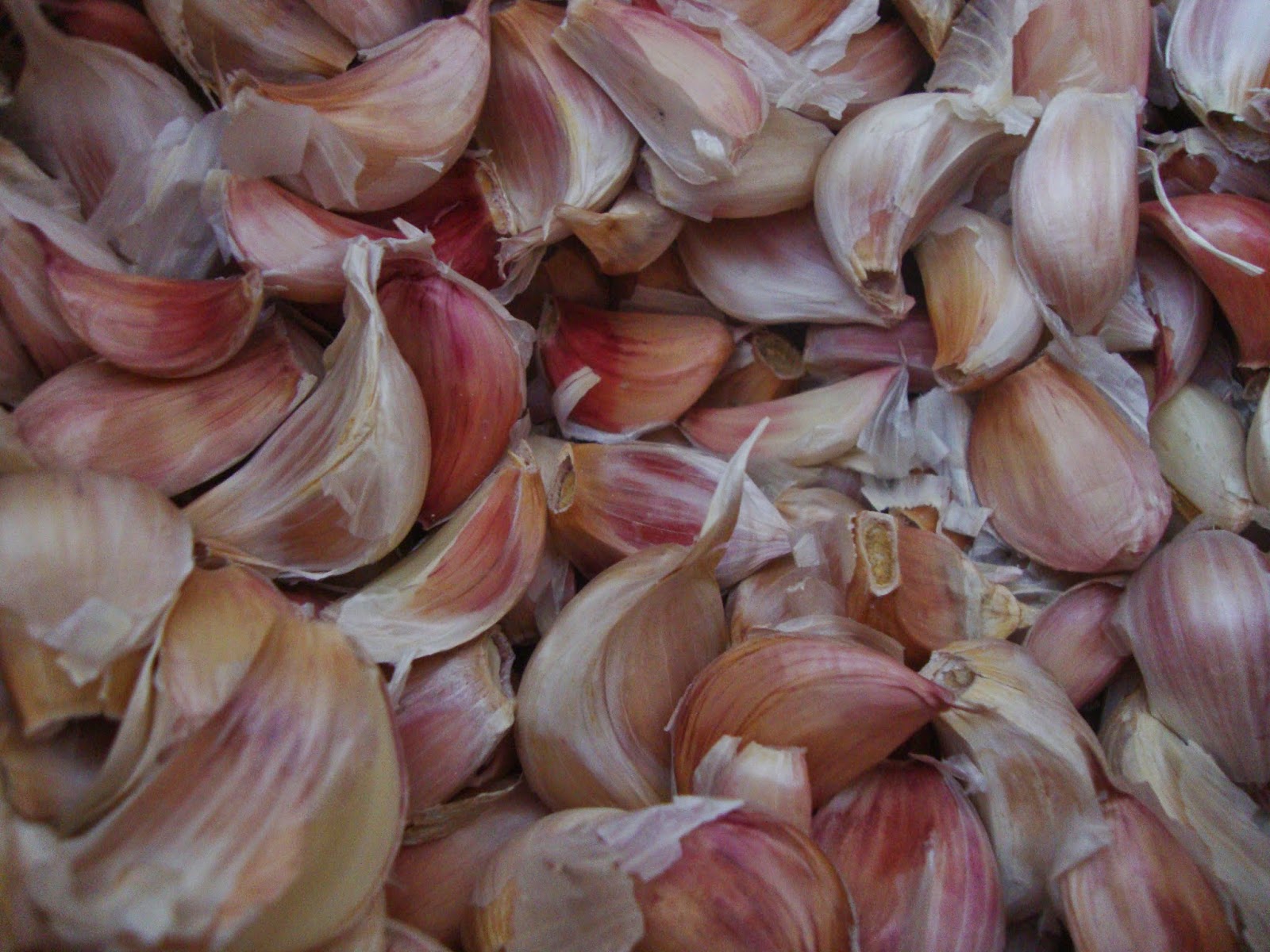
With each year, I feel my thoughts throb in time to the changing seasons, like a calendar with concepts instead of month names. For me August, September, and October have become Abundance, Acceptance, and Gratitude. This is when I can pull my weight in Asian pears from a tree whose limbs are touching the ground, groaning from all the plenitude of fruits. It is when the bright flowers of early summer are replaced by brown stems and pods full of promises for next year. It is when I clean and sort over 1,000 cloves of garlic for planting and feel like a queen, counting her rubies. It's like an annual crescendo, all the rewards of earlier work, a million wishes coming true at the same time.
Abundance:
After late summer's growing and gathering, early fall is always when I worry about where to put the latest pile of food I have harvested. I have to think in quantities of many gallons at a time. I know that come what may may come, so it just feels good to have A LOT.
But I'm not just talking about storing more shallots than one enormous family should eat in a winter. Our continuation as a species among species is not reliant on any one trait (strength, speed, size, having the most shallots, etc.) but in being ready for anything. Asteroids, Ice Ages, Ebola Zombies From Space: the one thing we all know is that we don't know what's next. Like squirrels preparing for winter, we know we should guard every useful morsel, but who knows what might be called for? What might be deemed useful? In a sense, because we cannot know what we will need next, appreciating diversity ends up being the only winning strategy: believing in the potential value of all things.
Acceptance:
Making my life a little bit fuller lately is a part-time job, working for the local school district. I'm a Special Education/Special Care Assistant at an elementary school, and honored to be part of the team that walks out to meet the short buses in the circle drive every morning.
Our task: to help each child living outside of life's various conventional parameters have the best educational experience possible.
Setting aside the belief that each one of us is a special snowflake for a moment, it is evident, when gathering many children from your town, that some of them are more special. Maybe what sets one apart is visible from the outside, like her facial features, or his limp. Maybe it's not, like that child who cries inconsolably when overwhelmed, the one who cannot (and maybe should not) sit in a chair for more than ten seconds at a time, or the one for whom all the letters look backward or out of place.
It might be a little simplistic to group them all together when they are each a walking lesson in individuality, but group them together we must. That's how we can help each one of them get more out of school. Due to the constraints of managing many young people in an enclosed space, the norms within a school can be a little narrow for some kids. With the help of a team of special educators, special students might find that the cookie cutter of classroom life can bend a little, to accommodate them, where they are; allowing the differences they bring to enhance the education of the other students in their class.
Remember that belief we set aside a couple of paragraphs ago? About us all being special? It's true. While categories can be useful, it seems sometimes that they just exist to be selectively ignored or applied. Special. Average. Different. Normal.
We can live so many ways and make any number of choices during our lives. It's best to respect differences, even if it some of them make standing in line or taking a state assessment more difficult. That's just a matter of what the environment demands. Change the demands, you change everything. Kids who struggle in one system thrive in another, and vice versa. Special kids bring a new human dynamic, a unique contribution, if those in their environment are able to see their potential worth.
Relativism, FTW.
Gratitude:
When our George was labeled as having special needs, at the age of four, it really made me think. I understood that his diagnosis was made in order to give him access to help from people in the same profession I have just joined. I also knew why they wanted to assess him. Having been around enough four year old boys by then, I knew that, while each one of them was his own little dude, George was different from all of them in a way they were not different from each other. He could add together large numbers and had an amazing memory, but he rarely looked you in the eye and made chit chat. He preferred to state empirical facts in a monotone, adorably husky, voice.
At preschool, he was very quiet, almost never speaking, causing them to suggest the assessment. He had a complete physical, combined with vision and hearing screenings, and in-depth sessions with speech pathologists and seasoned educators. They wondered if he was autistic, suspected something on the spectrum, but eventually settled on the special needs diagnosis.
Yeah, acceptance and all that, but when your kid gets such a label, you might find yourself looking for reasons why, things you could have done differently. My mind sought high and low through my memory for things that he missed out on, being the youngest of a threesome. Like most new mothers, I trotted my first-born, and second-born (to a lesser extent), to classes and community activities of all sort. George had gotten a lot less of that, as I was busier by the time he was ready for such pastimes. Resolved to boost and enrich his social life, I looked up the next time and date of story time at our library. I thought it would provide a nice opportunity to spend time with other kids. I might have been hoping that he'd copy them a little.
It was just the two of us walking into the bright children's section of the library, as the children's librarian began her program for the day.
With no other children to mind, I was free to ruminate on things I'd heard the specialists say about George as I watched him watch the children's librarian read to the townschildren.
The librarian noted that some of the kids in the group were moving around too much. "GOODNESS! Everyone has such a case of THE WIGGLES! We're going to need to use the WIGGLE BAG!!"she chirped. Soon, she was stooping and holding out an empty black cotton bag to each kid, singing, to the melody of "If You're Happy and You Know It, Clap Your Hands."--"Put your wiggles in the bag, put them in!" Each kid played along gleefully, wiggling their bodies, then tossing their invisible wiggles into the bag, and sitting still.
This is the sort of thing my other sons would have owned, convulsing convincingly and slam-dunking wiggles in an effort to outdo all the other wigglers. Instead, George stared at the little moment of spontaneous improv group theater until the bag got to him. He moved his legs perfunctorily and then flung his hands toward the opening of the bag, with a facial expression that said, "Let me get this straight. We are to wiggle, and then we are to pretend to put something in the bag which we do not put in the bag because it is nothing. Then we are still. And this was fun."
In that moment, I felt a swell of appreciation and kinship for my special son. His logical mind and his sweetness. He was trying, bless him, to give us all what we wanted, whether it made any sense or not. If I were a little more dramatic, I might have scooped him up and left at that very moment. Instead, I just made a mental note to let him lead the way more often.
When someone doesn't play along, it can make others nervous, and desirous to change that someone, compel them to conform. But what if we need to have our conventions reconsidered by some in our midst?
For his sake, for my sake, and for the sake of all people, I didn't want George to stop being different from everyone else. We need him and everyone else like him and everyone else unlike him.
This experience, and a few others, made me decide that George might do very well in an environment more suited to him than his local school classroom. We took the fish out of the tree, so to speak, and decided to unschool away. Let him do what he wanted with his time.
He has spent the last five years, drawing, tending to a revolving menagerie of pets, playing computer games, inventing games with his sister and friends, watching Spongebob, cracking jokes, playing the piano and violin, reading Captain Underpants, playing chess, dancing, writing lists, and riding his bike, among many other things.
He taught himself to read and write, is always researching the solar system, and does math just for fun, often making up problems for himself and solving them.
Those things that made his teachers notice and examine him also make him incapable of telling a lie. He wouldn't know how to begin to manipulate another person, nor can he live with doing anything less than his best effort in any chosen task. Is there still something very distinct about the way he sees the world and expresses himself? Something noticeably unlike everyone around him?
Abundance:
After late summer's growing and gathering, early fall is always when I worry about where to put the latest pile of food I have harvested. I have to think in quantities of many gallons at a time. I know that come what may may come, so it just feels good to have A LOT.
But I'm not just talking about storing more shallots than one enormous family should eat in a winter. Our continuation as a species among species is not reliant on any one trait (strength, speed, size, having the most shallots, etc.) but in being ready for anything. Asteroids, Ice Ages, Ebola Zombies From Space: the one thing we all know is that we don't know what's next. Like squirrels preparing for winter, we know we should guard every useful morsel, but who knows what might be called for? What might be deemed useful? In a sense, because we cannot know what we will need next, appreciating diversity ends up being the only winning strategy: believing in the potential value of all things.
Acceptance:
Making my life a little bit fuller lately is a part-time job, working for the local school district. I'm a Special Education/Special Care Assistant at an elementary school, and honored to be part of the team that walks out to meet the short buses in the circle drive every morning.
Our task: to help each child living outside of life's various conventional parameters have the best educational experience possible.
Setting aside the belief that each one of us is a special snowflake for a moment, it is evident, when gathering many children from your town, that some of them are more special. Maybe what sets one apart is visible from the outside, like her facial features, or his limp. Maybe it's not, like that child who cries inconsolably when overwhelmed, the one who cannot (and maybe should not) sit in a chair for more than ten seconds at a time, or the one for whom all the letters look backward or out of place.
It might be a little simplistic to group them all together when they are each a walking lesson in individuality, but group them together we must. That's how we can help each one of them get more out of school. Due to the constraints of managing many young people in an enclosed space, the norms within a school can be a little narrow for some kids. With the help of a team of special educators, special students might find that the cookie cutter of classroom life can bend a little, to accommodate them, where they are; allowing the differences they bring to enhance the education of the other students in their class.
Remember that belief we set aside a couple of paragraphs ago? About us all being special? It's true. While categories can be useful, it seems sometimes that they just exist to be selectively ignored or applied. Special. Average. Different. Normal.
We can live so many ways and make any number of choices during our lives. It's best to respect differences, even if it some of them make standing in line or taking a state assessment more difficult. That's just a matter of what the environment demands. Change the demands, you change everything. Kids who struggle in one system thrive in another, and vice versa. Special kids bring a new human dynamic, a unique contribution, if those in their environment are able to see their potential worth.
Relativism, FTW.
Gratitude:
When our George was labeled as having special needs, at the age of four, it really made me think. I understood that his diagnosis was made in order to give him access to help from people in the same profession I have just joined. I also knew why they wanted to assess him. Having been around enough four year old boys by then, I knew that, while each one of them was his own little dude, George was different from all of them in a way they were not different from each other. He could add together large numbers and had an amazing memory, but he rarely looked you in the eye and made chit chat. He preferred to state empirical facts in a monotone, adorably husky, voice.
At preschool, he was very quiet, almost never speaking, causing them to suggest the assessment. He had a complete physical, combined with vision and hearing screenings, and in-depth sessions with speech pathologists and seasoned educators. They wondered if he was autistic, suspected something on the spectrum, but eventually settled on the special needs diagnosis.
Yeah, acceptance and all that, but when your kid gets such a label, you might find yourself looking for reasons why, things you could have done differently. My mind sought high and low through my memory for things that he missed out on, being the youngest of a threesome. Like most new mothers, I trotted my first-born, and second-born (to a lesser extent), to classes and community activities of all sort. George had gotten a lot less of that, as I was busier by the time he was ready for such pastimes. Resolved to boost and enrich his social life, I looked up the next time and date of story time at our library. I thought it would provide a nice opportunity to spend time with other kids. I might have been hoping that he'd copy them a little.
It was just the two of us walking into the bright children's section of the library, as the children's librarian began her program for the day.
A fantastic place, run by a talented and dedicated children's librarian, don't get me wrong.
With no other children to mind, I was free to ruminate on things I'd heard the specialists say about George as I watched him watch the children's librarian read to the townschildren.
The librarian noted that some of the kids in the group were moving around too much. "GOODNESS! Everyone has such a case of THE WIGGLES! We're going to need to use the WIGGLE BAG!!"she chirped. Soon, she was stooping and holding out an empty black cotton bag to each kid, singing, to the melody of "If You're Happy and You Know It, Clap Your Hands."--"Put your wiggles in the bag, put them in!" Each kid played along gleefully, wiggling their bodies, then tossing their invisible wiggles into the bag, and sitting still.
This is the sort of thing my other sons would have owned, convulsing convincingly and slam-dunking wiggles in an effort to outdo all the other wigglers. Instead, George stared at the little moment of spontaneous improv group theater until the bag got to him. He moved his legs perfunctorily and then flung his hands toward the opening of the bag, with a facial expression that said, "Let me get this straight. We are to wiggle, and then we are to pretend to put something in the bag which we do not put in the bag because it is nothing. Then we are still. And this was fun."
In that moment, I felt a swell of appreciation and kinship for my special son. His logical mind and his sweetness. He was trying, bless him, to give us all what we wanted, whether it made any sense or not. If I were a little more dramatic, I might have scooped him up and left at that very moment. Instead, I just made a mental note to let him lead the way more often.
When someone doesn't play along, it can make others nervous, and desirous to change that someone, compel them to conform. But what if we need to have our conventions reconsidered by some in our midst?
Would different people be valuable and important then?
We have all become quite convinced of the importance of our social norms,
but that doesn't mean that there isn't something a little asinine about them.
Maybe it's safer to revel in the subjective, as long as you are reminded that it's just that: subjective. It is appealing to you,
and weird to someone else.
For his sake, for my sake, and for the sake of all people, I didn't want George to stop being different from everyone else. We need him and everyone else like him and everyone else unlike him.
This experience, and a few others, made me decide that George might do very well in an environment more suited to him than his local school classroom. We took the fish out of the tree, so to speak, and decided to unschool away. Let him do what he wanted with his time.
He has spent the last five years, drawing, tending to a revolving menagerie of pets, playing computer games, inventing games with his sister and friends, watching Spongebob, cracking jokes, playing the piano and violin, reading Captain Underpants, playing chess, dancing, writing lists, and riding his bike, among many other things.
He taught himself to read and write, is always researching the solar system, and does math just for fun, often making up problems for himself and solving them.
Those things that made his teachers notice and examine him also make him incapable of telling a lie. He wouldn't know how to begin to manipulate another person, nor can he live with doing anything less than his best effort in any chosen task. Is there still something very distinct about the way he sees the world and expresses himself? Something noticeably unlike everyone around him?
Thankfully, yes.
Labels:
abundance,
acceptance,
albert einstein,
different,
fall,
George,
gratitude,
normal,
special education,
special needs,
tank man,
unschooling,
update
Wednesday, May 21, 2014
The Garden Dirt: Getting Ready for the World
Did you know May is unschooling month?
While it may seem counterintuitive to dedicate something as restrictive as a month to the free-form hippie spin that is unschooling, there's a good reason to spend a little time talking about it. And that is because, almost nobody knows what exactly unschooling is. We who school in the unfashion find ourselves describing what unschooling isn't as often, if not more. Does an unschooled student use workbooks? Have to do things she doesn't want to do? Tend to her personal hygiene? Consider the feelings of others? Or are the little drop-outs all feral id, abandoning promising projects to hone Minecraft skills, only taking a break to go swear at elderly people in public?
The answer, of course, is D) All of the above, except for swearing at old people in public. Because some things should be done only in private.
The term "unschooling" is so undefined that it becomes a blank screen onto which people project their best or worst assumptions. Most discussions on educational styles tend to describe their merits and faults, because these styles have been defined for many years, by the pedagogical . Unschooling is...un. It's hard to say what it is. Each of us is making it up as we go along.
This is where I usually insert a garden metaphor. For this family, unschooling is much like hardening off.
Wait, what?
Here, on this very blog, I have covered how to germinate seeds, but I haven't gotten to what to do with them before putting them outside.
In order to have your tender little sprouts all ready to grow in the big bright outdoors, they will need to be hardened off, or exposed to the sunlight in small, indirect doses, in order to acclimate them to full-time sunshine gradually. Otherwise, the sun's rays will bleach them white and kill them within an afternoon. Not that that ever happened to me or anything.
A good way to start is on cloudy days, or in the shade, letting about-to-be-transplants be uncovered for only a couple of hours at a time, for a couple of days. The rest of the time, they should be indoors, or under cover.
Increase their time in the sun in the days to come, and in about a week, the world won't be such a lethal place to the delicate plantlings. If you are successful at the art of knowing when to shelter them, and when to expose them, they will be as strong and healthy as they need to be for the rest of their days. They become tough and sure, strong from within and tempered from without.
This is where I usually insert a learning metaphor. I think hardening off needs to happen to people too, to help them grow in the world. Only, instead of UV radiation, we must learn to weather the opinions, criticism, and scrutiny of others. I feel we flourish when we find a small but adequate space in our mind, where our intuition calls the shots, and we come to care very little about what the people around us think of us.
You see, I wouldn't be anythingschooling if I let the words and thoughts of those close to me influence me very much. Years ago, our decision to stray from conventional public school for everyone all the time solicited many an unsolicited opinion. Not feeling like slaying misconceptions about unschooling, I would say we had decided to home school a kid or two, and suddenly it was story time. Some of the people in my life felt the fact that they would choose differently for their family was relevant to what my family was doing. It really wasn't. I knew it and that was good enough. I thanked them for their advice and made my plans anyway.
Like most mothers, what I've taught my kids has largely been about treating others with respect. It's what we parents do: tell them to share, use their words, solve their problems, and treat others as they would like to be treated. All of that still stands. Nevertheless, along this little path, I've unlearned preoccupation with what others think about my decisions. Such concerns are unimportant, often inaccurate, and ultimately completely impossible to resolve.
The process of raising these people, whateverschooling we're using, has been a gradual process of finding what motivates and going with that. I have come to trust that thing inside that tells me what to do next, more completely than the notions of somebody who is not living my life. I have come to trust us to define these things for ourselves as we go along. So, even though George, working his way through a science workbook, looks very schooly, or Henry's clarineting literally happens at a school; unschoolings are afoot. Being an autodidact doesn't mean you can't elect to use resources at your disposal to learn things and have experiences of your choosing.
My self-led learners are also expected to practice delayed gratification and impulse control out the a. Ain't nothing school about that.That's just the natural result of living in a big messy house full of animals. Obligation, responsibility, and concern for others get a daily workout.
There is no shortage of reasons why you will not get what you want as soon as you want it in our home. So go outside and play.You've been HARDENED OFF!
These Little Gem Lettuces are ready for the big time. All acclimated and everything, my once-sprouts are now standing on their own in the sun. The soil under them is a vast place for deep roots, the sun above shines intensely at times, the sky brings wind and rain; and they're ready for all of it. Those bright leaves know what's up. Inherently perfect (even when the bugs show up later this summer) this whole robust arrangement has had the right mix of tough love and tender care, and will tick through the clock of its life, inspiring many a photograph, I'm sure.
Kind of like these people I'm growing, except I won't eat them.
Probably.
While it may seem counterintuitive to dedicate something as restrictive as a month to the free-form hippie spin that is unschooling, there's a good reason to spend a little time talking about it. And that is because, almost nobody knows what exactly unschooling is. We who school in the unfashion find ourselves describing what unschooling isn't as often, if not more. Does an unschooled student use workbooks? Have to do things she doesn't want to do? Tend to her personal hygiene? Consider the feelings of others? Or are the little drop-outs all feral id, abandoning promising projects to hone Minecraft skills, only taking a break to go swear at elderly people in public?
The answer, of course, is D) All of the above, except for swearing at old people in public. Because some things should be done only in private.
The term "unschooling" is so undefined that it becomes a blank screen onto which people project their best or worst assumptions. Most discussions on educational styles tend to describe their merits and faults, because these styles have been defined for many years, by the pedagogical . Unschooling is...un. It's hard to say what it is. Each of us is making it up as we go along.
And that's kind of the point.
This is where I usually insert a garden metaphor. For this family, unschooling is much like hardening off.
Wait, what?
Here, on this very blog, I have covered how to germinate seeds, but I haven't gotten to what to do with them before putting them outside.
In order to have your tender little sprouts all ready to grow in the big bright outdoors, they will need to be hardened off, or exposed to the sunlight in small, indirect doses, in order to acclimate them to full-time sunshine gradually. Otherwise, the sun's rays will bleach them white and kill them within an afternoon. Not that that ever happened to me or anything.
A good way to start is on cloudy days, or in the shade, letting about-to-be-transplants be uncovered for only a couple of hours at a time, for a couple of days. The rest of the time, they should be indoors, or under cover.
These barrel halves let light through to the salad seedlings hiding under them.
Increase their time in the sun in the days to come, and in about a week, the world won't be such a lethal place to the delicate plantlings. If you are successful at the art of knowing when to shelter them, and when to expose them, they will be as strong and healthy as they need to be for the rest of their days. They become tough and sure, strong from within and tempered from without.
This is where I usually insert a learning metaphor. I think hardening off needs to happen to people too, to help them grow in the world. Only, instead of UV radiation, we must learn to weather the opinions, criticism, and scrutiny of others. I feel we flourish when we find a small but adequate space in our mind, where our intuition calls the shots, and we come to care very little about what the people around us think of us.
This can be accomplished in school too.
You see, I wouldn't be anythingschooling if I let the words and thoughts of those close to me influence me very much. Years ago, our decision to stray from conventional public school for everyone all the time solicited many an unsolicited opinion. Not feeling like slaying misconceptions about unschooling, I would say we had decided to home school a kid or two, and suddenly it was story time. Some of the people in my life felt the fact that they would choose differently for their family was relevant to what my family was doing. It really wasn't. I knew it and that was good enough. I thanked them for their advice and made my plans anyway.
Like most mothers, what I've taught my kids has largely been about treating others with respect. It's what we parents do: tell them to share, use their words, solve their problems, and treat others as they would like to be treated. All of that still stands. Nevertheless, along this little path, I've unlearned preoccupation with what others think about my decisions. Such concerns are unimportant, often inaccurate, and ultimately completely impossible to resolve.
How can you please everyone? There are songs about how impossible that is.
The process of raising these people, whateverschooling we're using, has been a gradual process of finding what motivates and going with that. I have come to trust that thing inside that tells me what to do next, more completely than the notions of somebody who is not living my life. I have come to trust us to define these things for ourselves as we go along. So, even though George, working his way through a science workbook, looks very schooly, or Henry's clarineting literally happens at a school; unschoolings are afoot. Being an autodidact doesn't mean you can't elect to use resources at your disposal to learn things and have experiences of your choosing.
Unschoolers can, and often do, choose to be taught.
My self-led learners are also expected to practice delayed gratification and impulse control out the a. Ain't nothing school about that.That's just the natural result of living in a big messy house full of animals. Obligation, responsibility, and concern for others get a daily workout.
There is no shortage of reasons why you will not get what you want as soon as you want it in our home. So go outside and play.You've been HARDENED OFF!
See? Our fence is just like the one on the BU background!
These Little Gem Lettuces are ready for the big time. All acclimated and everything, my once-sprouts are now standing on their own in the sun. The soil under them is a vast place for deep roots, the sun above shines intensely at times, the sky brings wind and rain; and they're ready for all of it. Those bright leaves know what's up. Inherently perfect (even when the bugs show up later this summer) this whole robust arrangement has had the right mix of tough love and tender care, and will tick through the clock of its life, inspiring many a photograph, I'm sure.
Kind of like these people I'm growing, except I won't eat them.
Probably.
Tuesday, November 20, 2012
Thanks for Nothing
Here comes Thanksgiving in America, 2012. I bought a new spiral notebook and a whole bag of pens in preparation. It's going to be kind of a big deal this year so I don't want to forget anything.
During these long dull days after the debauchery of Halloween, and before the sparkling of Christmas*, it is popular to concentrate on the good things. And why not? Is gratitude and humility in the face of a livable life ever out of season? Those things for which we are all thankful are subjective: relative to what we have, and what we feel entitled to have. My mind wanders from all of the things I appreciate in my life, outward, to a larger thing that I believe enables it all to be as it is. And so, I find myself most thankful for nothing.
*or whatever you call that time of the year right before January, when you have to spend time with your grandma, overeat, and pretend not to be disappointed by gift-wrapped pajamas.
Oh, gentle reader, do you know how many times I nearly bored you to death with descriptions of How We Homeschool? Or How I See Things? I am ashamed of how many files I have where I start to describe My Take on Educating My Little Ones; in which I come to hate the sight of my own blah blah blah, kids need this, kids need that, I see things this way and that way. Wake up! Come back!
But you wouldn't have been right to come back. That blather is boring and irrelevant to your life. So, this thing, this nothing of which I am about to speak, isn't really nothing at all, but a very useful something, which anyone can appreciate.
Wake up! Come back!
Now, I'm no math instructor, but I have been married to one for a while, so I'm pretty sure I'm a math expert by now. I hope, at least, I can explain zero.
We, as humans, haven't always understood such a thing as nothing. Let that sink in for a second. Once, there was no nothing. When you're talking about anything in life, you're talking about something. But what if you need to hit the old space bar? Take a "rest," musically speaking? How would you convey nothingness without it being filled by something else? You make a beautiful little bubble around it. A little dot of nothing. Protected, defined, definitely there, and definitely something, but very decidedly not.
That is my way. No way. The Tao of Homeschooling? Yick, but maybe. Make no mistake, it doesn't involve a lot of feeling like not doing anything, so video games. There is a BU Motto, a modus operandi, if you will, a mission statement, of sorts:
Discover your passion(s) and get really good at something.
I heard a lady on TV, a few years ago, say, "The secret to happiness is to find out what you love most and become an expert at it." When I heard that, it quickly moved into my top favorite quotes and a core value in my life -just as we made the move to homeschool all of the kids, all of the time. As we have loped along, in pursuit of that ideal, the value of Nothing In Particular has made itself clear. That's where I come in. I stand guard at the perimeter and make the spaces happen, in our time, and in our home. I do little to orchestrate activities, rather feeling my role is to try to make sure nobody is too lazy, gets hurt, is overbooked, or burns down the house. Sometimes I clean up afterward, but making them do it for themselves is all part of the magical learning environment we call L-I-F-E, so I'm worming my way out that one too.
It wasn't as easy as it sounds, all of that lackadaisical letting go. When you are raising young children, there is a strong urge to involve them, and yourself, in things; to get out of the house, or bring other people in, to check out museums, parks, playgroups, besides school and sports. I enjoyed the years we spent that way, when our oldest two were young, and have had passing shadows of guilt that, while we still love our friends, family, and outings, we haven't made that sort of activity much of a priority as homeschoolers.
For me, this has been a particularly difficult instinct to trust at this time, because finding opportunities for socialization is usually at the top of the to-do list for parents who decide not to send their kids to school. Still, I can't help but suspect I am right in shrugging off that pressure for now. My self-appointed position is Serenity Enforcer. The phone is off, and a respectable portion of our time has a nice thick line drawn around it. Maybe this is what I think is best for my kids right now, and maybe it's just what I think is my best.
Here's what has happened in that doggedly defended space over the last couple of years: poetry written in the condensation collecting on the laundry room windows, math made into ocarina music, impromptu circus tricks on the front lawn, and doll fights whose resolutions can only be called "Shakespearean." What has bubbled up in our big empty cauldron has been a meld of art, academia, emotion, science, intellect, engineering, and athleticism, all roiling at the rate of natural human development. It feels like the whole world is here in this void we have carved out for ourselves.
I know I'm just speaking as me here. And you are not me, nor should you be. I am Xtreme. Our whole life is one big zero most days, and it wasn't always like this, nor should it have been, nor will it be forever. But understanding that, in any life, a peaceful little pocket of absolutely nothing isn't going to happen on its own, is the first step. When you know that you can finally take the lead and find places to draw a zero, crawl inside it, maybe with a kid or four, and see what happens next.
Subscribe to:
Posts (Atom)