But now let's go to the happy scenes :D The happy scenes are, he's just a cute little puppy.
knee-deep in higher learning
Wednesday, April 20, 2011
Tails and Tidings: Laszlo! by Thomas
It was September, on a rainy cold afternoon. When all the other dogs at the shelter looked their scariest. The reddest teeth. But that afternoon, we found the dog that was perfect. Laszlo!
He is my dog. You can say that, if you want.
My mom said he was perfect for me, my dad was reluctant, but I thought he was the perfect dog. The perfect little monster! He even tried to escape once, drool around his teeth. And he had his head stuck in a metal mesh fence. They got him out, he was no more than a nightmare. If he could remember that day once more, he could, something I can't talk about. Boy, he would do something bad.
But now let's go to the happy scenes :D The happy scenes are, he's just a cute little puppy.
He's done many things with me. He's gone to places with me. He'd done pretty much a lot of stuff with me. We've had him for seven months and I gotta say he's very nice. When mom sings to him, he shows his teeth, which is really cute.
One time we were at the beach,and me and mom and my big brother Henry were cleaning up, picking up trash. And I was waiting in the car and Laszlo was actually smiling, he was just so warm, sitting in her seat.
But now let's go to the happy scenes :D The happy scenes are, he's just a cute little puppy.
Labels:
dog,
introduction,
laszlo,
Tails and Tidings,
thomas
Sunday, April 17, 2011
The Garden Dirt: Dreams of Mycelium
You've met Thomas. Here's something you might not know about him, he hates mushrooms. Always has. If you feel the same way, he's going to sit next to you and pitch freestyle origami airships at me while I tell you of our Mushroom Saga. I will try not to choke up, for it is a tale of hope and disappointment and more hope, and beeswax.
Last year, around this time, Geza built this stellar box of cow poop.
Think that's gross? Let me tell you a little secret: Everything good comes from poop. The endless flow of matter, through its cycle of growth and decay, is a constant riveting sci-fi romance ambigram, in which poop is the main character.
But, here's what's disappointing about this box of poop: It looked like this a year later.

It was supposed to be overflowing with lots of freaky shaggy mane mushrooms for us to eat! Ouch! Okay, except Thomas. Thomas was not disappointed. If you ask him, this tale of failure is a happy one. Case closed. If you ask me, it did not fruit* because we let it get too dry.
*"To fruit" is what you call making mushrooms. Now, go forth and think of mushrooms as fruit.
I used this kit. I'm sure it's a great kit, with lots of fungal potential, but we screwed it up somehow. In a case such as this, my expert advice, seasoned by years of experience, is to rake it up and use it for something else.
I felt knocked down, humbled, yet ready to give it another go. Most of us still love mushrooms, and to grow mushrooms would at least earn us honorary family membership in some sort of elf or fairy organization, which can't be a bad thing. Even Thomas can get on board with that. We will bring intentional fungus to Backyard University!
Most of the stuff we mail order for the garden comes from one place, Territorial Seed Company, mainly because they're fairly close to us. I ordered a new mushroom kit from them. The log kind this time. What does that mean? The first kit was mycelium* riding on some sawdust. It was supposed to go into the soil and bloom ' shrooms everywhere. You saw how that went. This kit has the mycelium embedded into small wooden dowels, in a corkscrew groove up the side.

*Mycelium is something like roots for a fungus, sort of. It's threadlike and is usually not seen, when there is fruiting fungus about, because it's embedded in some sort of substrate. That means covered in dirt or growing in/consuming a chunk of wood in most cases. In our case, we will be watching for it at the end of the logs. From what I've read, when the ends of your logs turn white, you've got a good mycelium growth going on inside and fruiting is hopefully right around the corner.
After choosing and preparing your log,, these little babies go into the drilled holes.
We went with alder, scavenged by friends, mostly. They break down the fastest, but they're so easy to find around here. I used beeswax to plug up the holes, otherwise the dowels would have slid right out of whichever side of the log faces down. Of course, if you drill a small enough hole, the dowel has to be hammered into place, so sealing isn't considered necessary.
I relied heavily on internet sources for information on how best to do this project. That little pamphlet that came with the kit is infinitely losable. There is abundance of advice on how to select and prepare a log, but, if you ask me, the tricky part is the beeswax. There's very little online about how to seal these holes up. The best advice I came across was, "Try not to start a fire". Will do, but I'd like to go one step better. Due to endless rain, this was happening in our kitchen, so we couldn't go slinging wax about all willy nilly.
I was afraid the wax being too hot might kill some of the fungus on the dowels, so I tried to let softened wax cool a little first by dipping my finger into it (once it's cooled enough to do that without pain).
This amount of wax was perfect for closing up one hole. After rolling it off of my finger tip and into a little blob, it was quite easy to press into the space above the dowels. From what I've read, sealing wax will also work for this, but does sealing wax smell like honey? Does it give you many opportunities to say "beeswax", as in "mind your own.."? " Mind your own sealing wax?" There's a reason that never took off as a wildly popular English expression.
The mushroom kit came with three varieties, Pearl Oyster, Shittake, and Reishi.
In order to keep my logs straight, I carved a P, S, R into the sides and dripped wax on them, so that the grooves wouldn't be vulnerable to other, uninvited fungi.
Yes, I know you're a fun guy, but I just don't want you hanging around my Shittake, so beat it.
To seal the ends or not? This is hotly debated by would-be backyard mycologists the world over. Any part of the wood that isn't covered by intact bark or sealing wax is vulnerable to other fungi entry. Since the mycelium we're trying to cultivate needs to be the only fungus eating that log, we have to keep other stuff out. However, the biggest problem with getting mushroom logs to fruit is the log drying out. A log is sort of like a bundle of straws. The ends are where moisture enters and exits most readily. Sealing them up would greatly hinder the logs' ability to deliver moisture to its center. I'm leaving them open for now, and hoping all the other fun guys out there keep their distance.
If you ever decide to grow something in your yard, start with the south side. If you live in the US, that's going to be the the sunniest spot, most of the time. Now, guess where the shadiest spot is? North side! The north side of Backyard University is a shady netherworld, populated by mosses and ferns and occasionally, resentful anemic weeds. In short, prime mushroom garden spot.
This picture fills my heart with optimism. In life, some hopes go unrealized. Some efforts fall short. Perhaps, next year, Thomas' dreams will come true and I'll have to photograph logs that grew nothing but orange slime mold. But if that day comes, I will already have another kit and I will already be on the lookout for more cheap beeswax. For intentional fungi shall come to Backyard University! Our souls are inoculated with spores of hope and it's damp in there.
But, here's what's disappointing about this box of poop: It looked like this a year later.
It was supposed to be overflowing with lots of freaky shaggy mane mushrooms for us to eat! Ouch! Okay, except Thomas. Thomas was not disappointed. If you ask him, this tale of failure is a happy one. Case closed. If you ask me, it did not fruit* because we let it get too dry.
*"To fruit" is what you call making mushrooms. Now, go forth and think of mushrooms as fruit.
I used this kit. I'm sure it's a great kit, with lots of fungal potential, but we screwed it up somehow. In a case such as this, my expert advice, seasoned by years of experience, is to rake it up and use it for something else.
I felt knocked down, humbled, yet ready to give it another go. Most of us still love mushrooms, and to grow mushrooms would at least earn us honorary family membership in some sort of elf or fairy organization, which can't be a bad thing. Even Thomas can get on board with that. We will bring intentional fungus to Backyard University!
Most of the stuff we mail order for the garden comes from one place, Territorial Seed Company, mainly because they're fairly close to us. I ordered a new mushroom kit from them. The log kind this time. What does that mean? The first kit was mycelium* riding on some sawdust. It was supposed to go into the soil and bloom ' shrooms everywhere. You saw how that went. This kit has the mycelium embedded into small wooden dowels, in a corkscrew groove up the side.
*Mycelium is something like roots for a fungus, sort of. It's threadlike and is usually not seen, when there is fruiting fungus about, because it's embedded in some sort of substrate. That means covered in dirt or growing in/consuming a chunk of wood in most cases. In our case, we will be watching for it at the end of the logs. From what I've read, when the ends of your logs turn white, you've got a good mycelium growth going on inside and fruiting is hopefully right around the corner.
After choosing and preparing your log,, these little babies go into the drilled holes.
I was afraid the wax being too hot might kill some of the fungus on the dowels, so I tried to let softened wax cool a little first by dipping my finger into it (once it's cooled enough to do that without pain).
The mushroom kit came with three varieties, Pearl Oyster, Shittake, and Reishi.
Yes, I know you're a fun guy, but I just don't want you hanging around my Shittake, so beat it.To seal the ends or not? This is hotly debated by would-be backyard mycologists the world over. Any part of the wood that isn't covered by intact bark or sealing wax is vulnerable to other fungi entry. Since the mycelium we're trying to cultivate needs to be the only fungus eating that log, we have to keep other stuff out. However, the biggest problem with getting mushroom logs to fruit is the log drying out. A log is sort of like a bundle of straws. The ends are where moisture enters and exits most readily. Sealing them up would greatly hinder the logs' ability to deliver moisture to its center. I'm leaving them open for now, and hoping all the other fun guys out there keep their distance.
If you ever decide to grow something in your yard, start with the south side. If you live in the US, that's going to be the the sunniest spot, most of the time. Now, guess where the shadiest spot is? North side! The north side of Backyard University is a shady netherworld, populated by mosses and ferns and occasionally, resentful anemic weeds. In short, prime mushroom garden spot.
Labels:
alder,
beeswax,
drill,
freestyle origami airships,
fungus,
logs,
mushroom kit,
mushrooms,
mycelium,
pearl oyster,
plugs,
reishi,
shittake,
The Garden Dirt
Monday, April 11, 2011
Tails and Tidings: How Things Got This Way and Goats
I don't want to start a fight.
You know, the old old old argument about Darwin and evolution and how everything got this way? In the interest of keeping on common ground, I'll say something humble, like: I don't think we can know it all. Learning and exploring new theories is sure a fun pursuit, but there's so much we humans don't understand about the workings of our own brain. Our brain, which is the only thing we have to understand anything else with! The folded-up futility of that notion makes me passive and drowsy.
I'm pretty sure of one thing though, if you have an opinion about evolution, you are probably getting it wrong.
First swing! Ha! You going to take that?
So, doesn't the old song go that all things want to evolve to some higher incarnation of themselves, in order that they may better survive and leave all the losers in their dust? Not according to Stephen Jay Gould, one of Geza's favorite scientists.
Many years ago, my smart, interesting husband told me, "Almost everyone misunderstands natural selection." I remember thinking, "Oh good, now let's stop talking about this." I didn't feel like being schooled. Instead I nodded and mmmd. He went on to describe something he was reading, by Mr. Gould, that sounded like a total blur at first, but slowly came into focus as I listened and thought about it. It stayed with me, and it affects the way I approach interaction with most animals, my own family included.
Let's see if I can break it down. Living things are the way they are, because the way things are works better than it doesn't work, for now. A sudden change in environment comes along and forces some traits to the outer edges of the gene pool, leaving behind the most advantageous traits, given the new situation. That's what reproduces most abundantly afterward, so that's what we see all around us. That's all.
Let me try again. Have we all seen one of these?

Pretend the pasta dough is all of the traits possible for any given species. Now, pretend the shape of the hole on the front plate is the environment. As the dough passes through the cut out, what doesn't fit is left behind and what's coming out is shaped exactly like the imposing demands of its environment. Change the circumstances surrounding the organism, and its traits change.
Living things are the way they are because of events that already happened to their genetic ancestors , not because they are striving to be more fit and thus survive better. How does this theory affect Backyard University? To Goat Mountain! (for goats only)

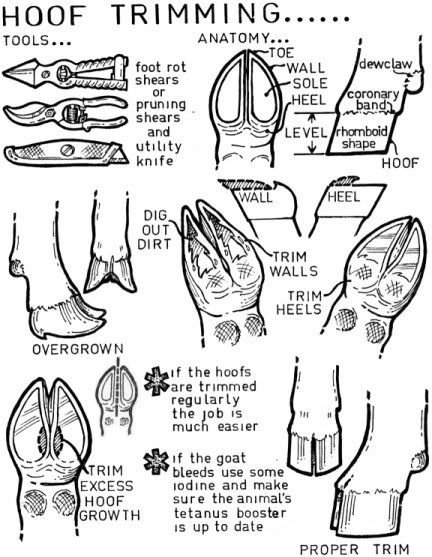
When we planned to get a pet goat and keep it in our backyard, we had lots of helpful friends trying to brace us for what to expect. Goats love to climb and are determined escape artists. The shelter where we adopted her and Tofu wanted to make sure we were aware of goats' hoof care needs.
I know she looks extra cute, but Inez is no different from all the other goats out there. She has needs. We, as her family, must accept that unless we want to make life more difficult for all of us. Who needs that fight?
Naturally, I started thinking of Stephen Jay Gould. I figured Inez was the way she was because of the history of the genes that brought her here.
Did you know that one of goats' persistent behaviors just so happens to aid them with a personal grooming matter? How on earth did goats get by without someone to provide farrier service for them? (That's hoof care.) It has something to do with their endless desire to put their hooves on everything and push against it.
NO KIDS ALLOWED! UNLESS YOU'RE A GOAT!
She was already giving the rouge rose bush I jammed into the top of it a run for its money when we left. She can climb it deftly and looks around from the highest spot in the yard, surveying her pig and dogs like a proud queen who just enjoyed a nice little climb. I have a feeling she'll love it, even on rainy days.
I'm pretty sure of one thing though, if you have an opinion about evolution, you are probably getting it wrong.
First swing! Ha! You going to take that?
So, doesn't the old song go that all things want to evolve to some higher incarnation of themselves, in order that they may better survive and leave all the losers in their dust? Not according to Stephen Jay Gould, one of Geza's favorite scientists.
Many years ago, my smart, interesting husband told me, "Almost everyone misunderstands natural selection." I remember thinking, "Oh good, now let's stop talking about this." I didn't feel like being schooled. Instead I nodded and mmmd. He went on to describe something he was reading, by Mr. Gould, that sounded like a total blur at first, but slowly came into focus as I listened and thought about it. It stayed with me, and it affects the way I approach interaction with most animals, my own family included.
Let's see if I can break it down. Living things are the way they are, because the way things are works better than it doesn't work, for now. A sudden change in environment comes along and forces some traits to the outer edges of the gene pool, leaving behind the most advantageous traits, given the new situation. That's what reproduces most abundantly afterward, so that's what we see all around us. That's all.
Let me try again. Have we all seen one of these?

Pretend the pasta dough is all of the traits possible for any given species. Now, pretend the shape of the hole on the front plate is the environment. As the dough passes through the cut out, what doesn't fit is left behind and what's coming out is shaped exactly like the imposing demands of its environment. Change the circumstances surrounding the organism, and its traits change.
Living things are the way they are because of events that already happened to their genetic ancestors , not because they are striving to be more fit and thus survive better. How does this theory affect Backyard University? To Goat Mountain! (for goats only)
When we planned to get a pet goat and keep it in our backyard, we had lots of helpful friends trying to brace us for what to expect. Goats love to climb and are determined escape artists. The shelter where we adopted her and Tofu wanted to make sure we were aware of goats' hoof care needs.
Naturally, I started thinking of Stephen Jay Gould. I figured Inez was the way she was because of the history of the genes that brought her here.
Did you know that one of goats' persistent behaviors just so happens to aid them with a personal grooming matter? How on earth did goats get by without someone to provide farrier service for them? (That's hoof care.) It has something to do with their endless desire to put their hooves on everything and push against it.
Which came first; the handy ever-renewing hooves for climbing, or the insatiable craving to push their hooves against rocks, thereby filing them down? I don't know and I don't care. I just know I get to trim less off of my goat's hooves, less often, if I provide some little scrap of something resembling what might have been a more natural environment for her.
Granted, I don't know much about what that might really be. There are so many factors to consider and I am but a humble Spanish major. However, I have a faint hunch that our Land of Many Waters is less than ideal for hoof health. (say "hoof health" five times fast and I'll send you an apple-flavored pig treat).
We live in the muddiest town in the world, surrounded by big mountains. I'd love to move to those mountains someday, and take my goat (s?) with me. Until then, we have a mini mountain in our backyard.
It was built by Geza, who personally hauled giant rocks from a nearby quarry in order to give Inez the kind of hoof-to-rock action she so richly deserves. I'll still have to trim those hooves, and Inez will never stop trying to climb everything in sight, but she seems very happy with this opportunity to put her instincts to good use.
Granted, I don't know much about what that might really be. There are so many factors to consider and I am but a humble Spanish major. However, I have a faint hunch that our Land of Many Waters is less than ideal for hoof health. (say "hoof health" five times fast and I'll send you an apple-flavored pig treat).
Thursday, April 7, 2011
Brain Storms: Mathberries
What do strawberries and math have in common? George loves them both. George is my third boy, and at the moment he is five. To you and me that means he's been alive for five years, but to George, it goes a little beyond that. He = 5.
I hesitate to attempt to explain what is going on in George's mind. From where I stand, it looks like math is the most authentic language he's encountered so far. His ability to use English is far behind his peers, but his ability to use numbers and their relationships is far beyond that of me, a big smart grown-up.
Here he is doing some geometry with his math instructor dad.

This is sort of like the stuff I was doing in the 9th grade. He likes order, patterns, and things that make sense. That's why, when I wondered to myself how to build a strawberry tower in the garden, I decided to make it mathy. I wanted George to see something special in it, even if it doesn't yet offer big red berries for him to add to his breakfast on a summer morning.
I give you, Mathberry Tower:

Looking at it from the top, you can't tell that each of those shapes, or polygons, are a different level, "stacked" up, like a real tower; a real, short, somewhat delicate, tower. Not only is it three polygons stacked on top of each other, it is a triangle, a square, and a pentagon: 3, 4, 5. I imagine George dancing around it when it's in bloom.
Then I got some burlap.
I know! It's thrilling.
Burlap is a very mathy fabric. It, the berries, and a way to make a new strawberry planter out of burlap were swirling around in my foggy head one morning. If I made a sack, and cut holes, I'd be stuck with edging the holes, that would be unraveling maddeningly.
No, I needed real inspiration.


You get the idea? Well, even if you're not sure, don't worry. Burlap is forgiving, as long as you give yourself a lot of extra on the edges to fold over and iron. If you don't do that, you incur the wrath of burlap and it will unravel on you mightily, eating up all of your precious seam allowance! Run!!
Once the sides of the strip are sewn down, the whole thing might look a little like Deep-Fried Burlap, with ripples and curves. Let these little irregularities be your friend. They make the strip coil up on its own, and give you more power to sculpt it as you sew the spiral into place.
Here's Mae, adding tiny baby pinches of sand to the soil, to make it drain better. Fun tip! A storage box and a commitment to sweep soon afterward are all you need for your toddler to enjoy playing in the dirt in the house. Real talk? She could have frolicked in the stuff accumulating under our air hockey table, but this looks so much more Montessori.

I hope I've given George yet another way to appreciate our mathberries, because this bending and twisting of fabric to achieve a 3D shape is a very interesting breed of math called topology. As math instructors always say, "Math is everywhere." They also ask if you've turned in your homework, and when you're going to make up that quiz you missed, but that's not something I can plant in, so I'm moving on.
Now that you know about topology, you'll see it everywhere: in landscapes and windsocks, toilet paper rolls and dog collars.
Or maybe you'll just go buy some fresh fruit and count the days until June. And think up more stuff to do with burlap.
I hesitate to attempt to explain what is going on in George's mind. From where I stand, it looks like math is the most authentic language he's encountered so far. His ability to use English is far behind his peers, but his ability to use numbers and their relationships is far beyond that of me, a big smart grown-up.
Here he is doing some geometry with his math instructor dad.
This is sort of like the stuff I was doing in the 9th grade. He likes order, patterns, and things that make sense. That's why, when I wondered to myself how to build a strawberry tower in the garden, I decided to make it mathy. I wanted George to see something special in it, even if it doesn't yet offer big red berries for him to add to his breakfast on a summer morning.
I give you, Mathberry Tower:
Looking at it from the top, you can't tell that each of those shapes, or polygons, are a different level, "stacked" up, like a real tower; a real, short, somewhat delicate, tower. Not only is it three polygons stacked on top of each other, it is a triangle, a square, and a pentagon: 3, 4, 5. I imagine George dancing around it when it's in bloom.
Then I got some burlap.
Burlap is a very mathy fabric. It, the berries, and a way to make a new strawberry planter out of burlap were swirling around in my foggy head one morning. If I made a sack, and cut holes, I'd be stuck with edging the holes, that would be unraveling maddeningly.
No, I needed real inspiration.
I needed a toilet paper tube.
See?
Ah,
and?
Once the sides of the strip are sewn down, the whole thing might look a little like Deep-Fried Burlap, with ripples and curves. Let these little irregularities be your friend. They make the strip coil up on its own, and give you more power to sculpt it as you sew the spiral into place.
I hope I've given George yet another way to appreciate our mathberries, because this bending and twisting of fabric to achieve a 3D shape is a very interesting breed of math called topology. As math instructors always say, "Math is everywhere." They also ask if you've turned in your homework, and when you're going to make up that quiz you missed, but that's not something I can plant in, so I'm moving on.
Or maybe you'll just go buy some fresh fruit and count the days until June. And think up more stuff to do with burlap.
Labels:
Brain Storms,
burlap,
geometry,
George,
mathberries,
polygon,
sand,
soil,
strawberries,
strawberry planter,
topology
Wednesday, April 6, 2011
How to Have Fun with Your Gun and Keep Your Mom Happy
Last summer, Henry said he wanted an air gun. He did jobs around the house to earn money, ordered it on eBay, and has shown a lot of responsibility in keeping it put away indoors, and using it safely outside. Just one problem, there were bright little plastic balls all over the garden. He received biodegradable pellets for Christmas, but this is how he managed to keep on shooting through fall.
Sunday, April 3, 2011
The Muddy Kitchen: Tofu or Not Tofu?
Where am I going with this? A tofu recipe. A tofu recipe you might be able to believe in, because it is being passed on to you by somebody who "gets it", okay? Tofu is gross. I see things your way. You can trust me now. The following recipe might not make you love tofu, but it might just make you hate it less, which is saying a lot for a glistening chunk of colorless beanscum.
First, I'd like to clear up any confusion. This is not the Tofu I'm talking about.
My friend, Marlene, sent me How to Cook Everything, by Mark Bittman, many years ago. I have used it more than I ever imagined using any cookbook. That's where I first saw the recipe for Deep-Fried Tofu, but I ignored it. I only hated deep-frying slightly less than I hated tofu.
I gave fried tofu a chance when eating out at Momiji Chinese & Japanese Restaurant, in Lincoln City, Oregon. It was the whole gang of us, and all children were tired and hungry. As a parent, you pretty much sweat bullets, if you have any conscience at all, bringing a bunch of potentially volcanic kids into a restaurant. The first thing on the menu that jumped out at me was the Agedashi Tofu (deep fried cubes), on the appetizer section of the menu. It'd be out soon, it's sort of a finger food, and it's not spicy. Yes, two orders of that, please. It was fabulous, simple, and the kids woofed it down, so to speak. This is what led me to think maybe I would try it in my own kitchen.
First drain the tofu.
I prefer to use firm over anything else. Slash the packages and let all the fluid drain out. Then cube it (1") and set the cubes on something absorbent, like a clean dishtowel. Give them all afternoon to dry. The drier they are, the easier they are to work with, which is the reason I go for firm when buying the tofu in the first place. Mark's recipe calls for the silken tofu, which is too much for me to mess with when I'm deep-frying.
When I'm ready to cook them, I prepare a dry mixture of flour, salt and pepper, and a mixture of egg yolks and ice water.
Labels:
deep-fried tofu,
how to cook everything,
momiji,
soy,
The Muddy Kitchen
Friday, April 1, 2011
Tails and Tidings: Twisted again, try to keep up.
I was going to write an introduction of the all the animals we keep and clean up after, but the spirit of the holiday has overcome me. Besides, we're down one chicken. Hot Sauce started talking smack and I said to myself, "You know what? Maybe a little chicken tetrazzini would be just the thing for dinner tonight."
Oh, look at that, Hot Sauce! Somebody just cut off your head and feet! Whatcha got to say about that?
Not bloody likely! You may not eat chickens, but I feast greedily on meal worms and losers!
And, scene*
*No chickens were beheaded in the making of this blog post. They were, however, humiliated, and reminded that their owner is a dork. Maybe tetrazzini isn't a worse fate than that.
Tomorrow marks six weeks with our lovelies. They have gone from silky puffs of cheeping sweetness to big scratchy mottled pullets whose cheeps turn to hoarse clucks when they're startled, or thirsty, or peevish. We got them from the Urban Farm Store, in Portland, Oregon.
Here they are, waiting for me to finish cleaning their "cage". It's more of an "area", but I'm afraid that makes me sound like a "total slob", so let's go back to "cage". I've got tarps enclosing part of our laundry room. It contains them somewhat, but they could get out if they were really determined to do so; say, if someone forgot to dump and refill their water bowl after they meticulously packed it with shavings and feces. They'd cross the barrier, fashioned from crates, buckets, and a bag of goat feed, to find said owner, and cluck at her hoarsely.
So let's do a pullet line-up. Pullet is what you call a female chick when she's not cute anymore. That's just science.
Lenore is a Black Star, or Black Sex-Link. She is so-named because her gender is linked to her color. Males of her breed are brown. This is a great chicken for us because we knew from the get-go that she was a she. We're beginners in the world of chicken-keeping, and we have neighbors to think of. No roosters allowed. They are rumored to be prolific layers, so we have high expectations for Lenore. No pressure, girl. Just crank out enough high quality organic eggs to feed me and my enormous family. Think ovulatory thoughts.
You may remember Hot Sauce, from our prankery earlier. She's a Rhode Island Red and she's feeling much better than she looks. Not everyone has to be cute in the face, you know.
Candy is a Buff Orpington. She is starting to seek work as a model. She just looks so ideal. So chickeny.
I was saving the best for last. Cora, rocking the cheek puffs. She's an Ameraucana, has dark bluish gray feet, and will hopefully grace us with blue eggs. Most of the time, she can be found playing their drum (an overturned empty humus container) and touching up her eyeliner.
These girls will move outside in a month or so. I'm planting seeds for their outdoor yard: flax, vetch, clover and buckwheat. Geza is designing a two story coop/in-door yard out of an old kitchen table. Enticing, eh? Old kitchen table? What? You want to know more, don't you? You want to see pictures and squint at your screen and whisper "wow" to yourself, right? I know! Stay tuned!
And, scene*
*No chickens were beheaded in the making of this blog post. They were, however, humiliated, and reminded that their owner is a dork. Maybe tetrazzini isn't a worse fate than that.
Tomorrow marks six weeks with our lovelies. They have gone from silky puffs of cheeping sweetness to big scratchy mottled pullets whose cheeps turn to hoarse clucks when they're startled, or thirsty, or peevish. We got them from the Urban Farm Store, in Portland, Oregon.
So let's do a pullet line-up. Pullet is what you call a female chick when she's not cute anymore. That's just science.
These girls will move outside in a month or so. I'm planting seeds for their outdoor yard: flax, vetch, clover and buckwheat. Geza is designing a two story coop/in-door yard out of an old kitchen table. Enticing, eh? Old kitchen table? What? You want to know more, don't you? You want to see pictures and squint at your screen and whisper "wow" to yourself, right? I know! Stay tuned!
Labels:
ameraucana,
april fools,
black star,
buff orpington,
candy,
chickens,
cora,
hot sauce,
lenore,
rhode island red,
Tails and Tidings
Subscribe to:
Posts (Atom)